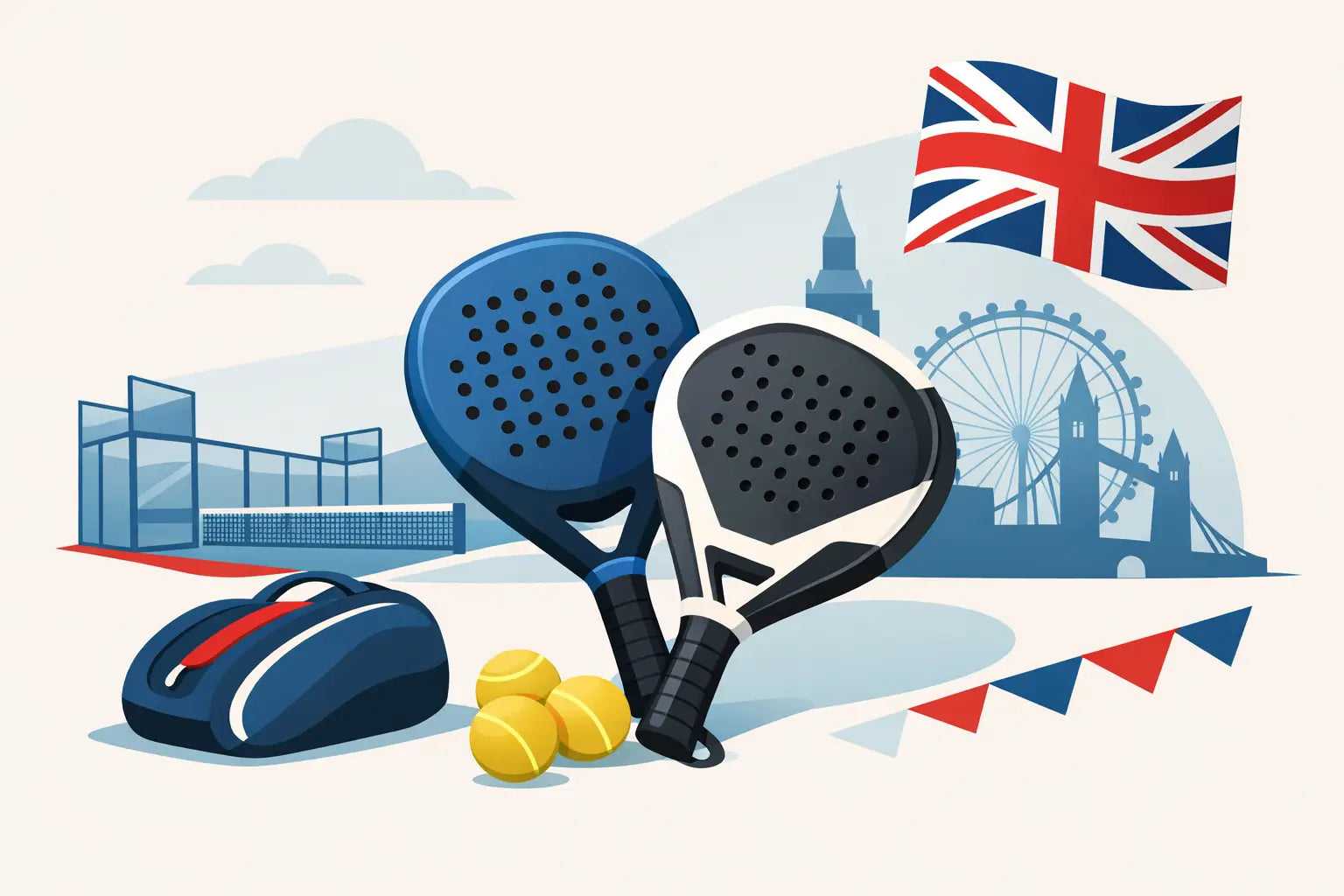

A racket that feels brilliant in a warm indoor demo can feel completely different on a damp British court in February. That is why choosing padel rackets for British weather is not a marketing extra - it is a real performance decision. Cold air, moisture, changing ball speed and slippery conditions all affect how your racket feels in hand and how reliably it responds under pressure.
In the UK, padel is rarely played in perfect, dry, Mediterranean conditions. You might start a match in drizzle, finish under floodlights, and spend the whole session dealing with a court that plays slower than expected. That changes what matters in a racket. It is not just about power, spin or what the pros use. It is about consistent feel, dependable grip, and materials that hold up when conditions are less than ideal.
What British weather actually changes
The biggest mistake players make is treating weather as a side issue. In reality, it changes the behaviour of both the racket and the ball. Colder temperatures can make a racket feel firmer and less forgiving, especially if it already has a dense core. Moisture can affect grip security, while heavier, damp balls tend to slow rallies down and reduce easy power.
That means the same racket can feel sharp and explosive in summer but a bit harsh in winter. For beginners, that often shows up as mishits and arm fatigue. For more experienced players, it can mean losing touch in defensive shots or struggling to generate the same pace overhead.
British conditions also reward control more than people think. On a slower court, raw power matters less if you cannot place the ball cleanly or reset the point under pressure. A racket that gives you confidence on volleys, blocks and bandejas is often the smarter choice than one that only feels impressive on perfect contact.
What to look for in padel rackets for British weather
If you play regularly in the UK, there are a few design features worth paying close attention to. These are not gimmicks. They are the details that make a racket feel reliable across the year rather than great for six sunny weeks.
Carbon fibre for a more stable response
A quality carbon fibre construction gives a racket better structural stability and a more consistent response over time. That matters in British weather because fluctuating temperatures and damp conditions can expose weaker materials quickly. A racket built with better face and frame materials tends to hold its feel better and gives cleaner feedback on contact.
There is a trade-off here. Full carbon constructions usually feel more direct and performance-led, but they can also be less forgiving for complete beginners if paired with a hard core or aggressive shape. The key is balance, not simply choosing the stiffest racket on the shelf.
EVA foam that suits colder conditions
Core density has a huge impact on feel in the UK. In cold weather, a hard EVA core can become even less forgiving, which is fine for strong players with fast swings but not always ideal for everyone else. A medium or softer advanced EVA often makes more sense for British conditions because it helps maintain comfort and usable output when temperatures drop.
That does not mean soft equals better across the board. If you are an advanced player who likes a crisp, attacking response, a firmer core may still suit you. But for most club players, especially those playing outdoors year-round, a medium-density core is usually the safer all-rounder.
A shape that matches the court speed
Round, hybrid and diamond shapes all have their place, but British weather tends to favour rackets with a bit more control and forgiveness. Round rackets offer a larger sweet spot and easier handling, which is useful when contact is less clean on cold or damp days. Hybrid shapes strike a strong balance, giving enough power for attacking play without becoming too demanding.
Diamond rackets can still work well, especially for experienced players who generate their own pace and want a more head-heavy hitting zone. But in slower, wetter conditions, they can feel harder to manage unless your technique is already solid. If your game is built on consistency rather than all-out put-aways, a hybrid or round shape often gives better value over a full British season.
Why grip and surface texture matter more in the UK
Players often focus on the face material and forget the most obvious point of contact - the handle. In British weather, grip security becomes a bigger issue because moisture, cold hands and damp air all make it easier for the racket to shift during play. Even a technically excellent racket will feel unreliable if you are constantly readjusting it between points.
A well-finished handle and a setup that works with overgrips matter more here than they might in drier climates. You want a racket that feels secure without needing to be strangled in the hand. That helps with comfort, touch shots and confidence at the net.
Textured faces also earn their keep in UK conditions. When the ball is heavier and the court is slower, easy spin generation can help you create more margin and variation. A textured surface will not magically transform your game, but it can help add bite to slices, viboras and controlled overheads when conditions are working against you.
Choosing by player level, not just by spec sheet
The best padel rackets for British weather are not the same for every player. Your level, swing speed and playing style still matter. The weather changes the decision, but it does not replace it.
Beginners and improving club players
If you are fairly new to padel, go towards control and comfort first. A round or forgiving hybrid racket with a medium EVA core is usually the right call. You will get a larger margin for error, better defensive stability and less punishment on off-centre contact. In British conditions, that usually translates into longer rallies, more confidence and fewer sore arms.
A lot of newer players buy a power racket too early because it sounds more advanced. In reality, a manageable racket helps you improve faster, especially when courts are slower and points are won through positioning and consistency.
Intermediate all-round players
This is where the hybrid shape starts to shine. If you have developed decent technique and want a racket that can handle both defence and attack, a carbon-faced hybrid with an accessible core gives you room to progress without becoming overly technical. You can still finish points at the net, but you do not lose control when the weather turns or the ball feels heavy.
For many UK club players, this is the sweet spot. Premium materials, a balanced shape and dependable feel across changing conditions usually offer more day-to-day value than chasing an extreme setup.
Advanced and attacking players
If you play an aggressive game and hit with confidence, you may still prefer a firmer, more powerful racket. A diamond or aggressive hybrid can make sense if you know how to use it and want stronger overhead output. But even here, British conditions should temper the choice. A racket that is too hard or too head-heavy can become unforgiving when contact is not perfect.
The better move is often an attacking racket with enough control built in, rather than the most extreme option available. Power is useful. Usable power is better.
Value matters when you play in real conditions
British players should be wary of paying prestige prices for features that sound elite but do not actually improve regular match play. The better question is simple: does this racket perform consistently on UK courts, across the year, for your level of play?
Premium materials absolutely matter. Carbon fibre, well-tuned EVA foam and quality finishing all make a difference. But that does not mean you need to overpay for a logo. A good racket should justify its price through feel, durability and practical performance, not branding alone.
That is where a specialist UK approach makes sense. Brands that understand local conditions can build around what players here actually need - reliable response, strong material quality and confidence that the racket will not just feel good in ideal conditions. PDX Padel has built its range around exactly that idea, with rackets engineered for British conditions and matched to different player levels rather than one-size-fits-all claims.
The smart way to choose
If you mostly play outdoors in the UK, lean towards control, stability and comfort. If you play indoors year-round, you can be a bit more flexible, but a well-balanced racket still tends to outperform a highly specialised one over time. And if you play in all seasons, the safest bet is a premium hybrid or round model with carbon construction, a medium-feel core and a secure, comfortable grip setup.
The right racket should make poor conditions feel manageable, not magnify every small mistake. British weather is unpredictable enough already. Your equipment should be the stable part of your game.