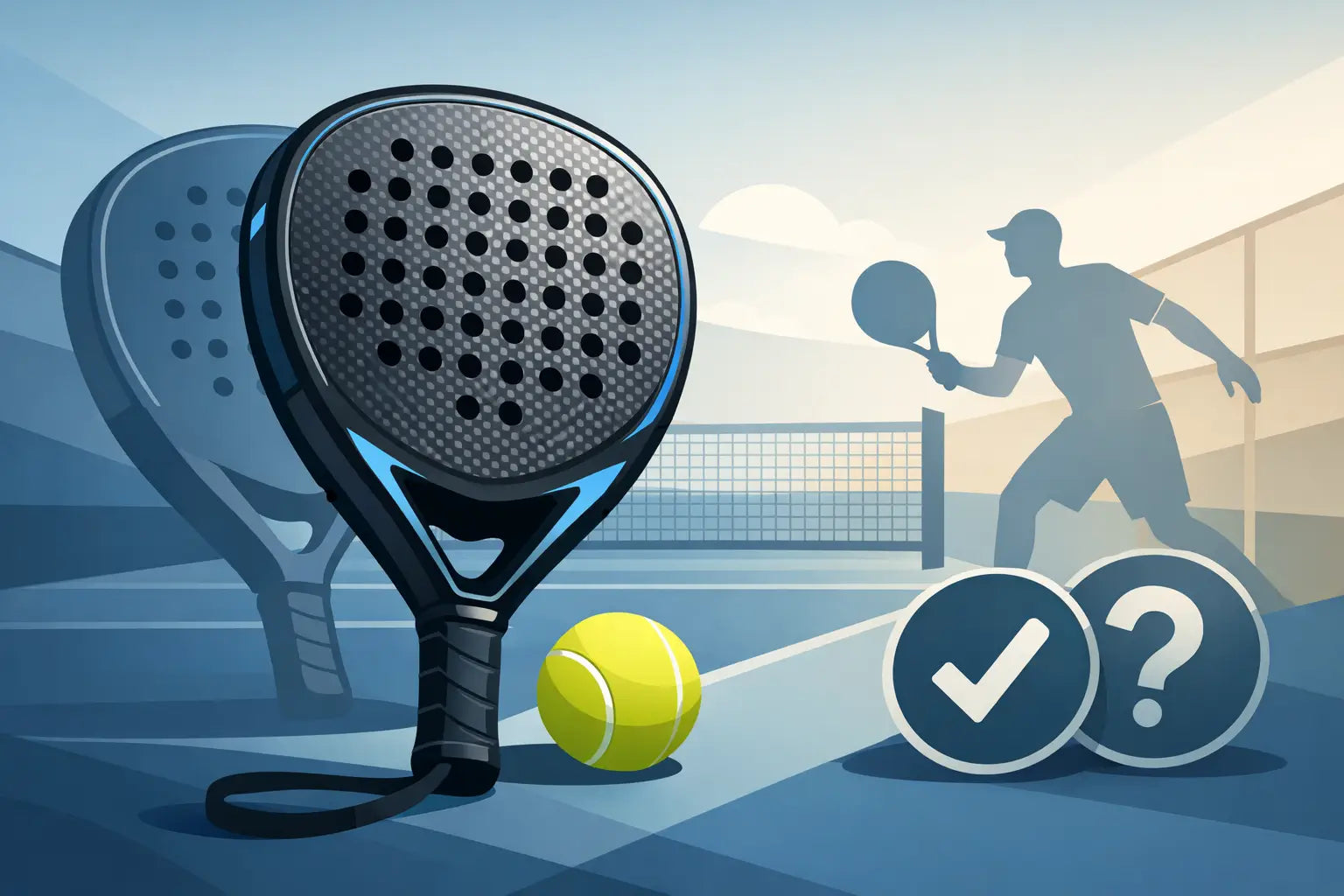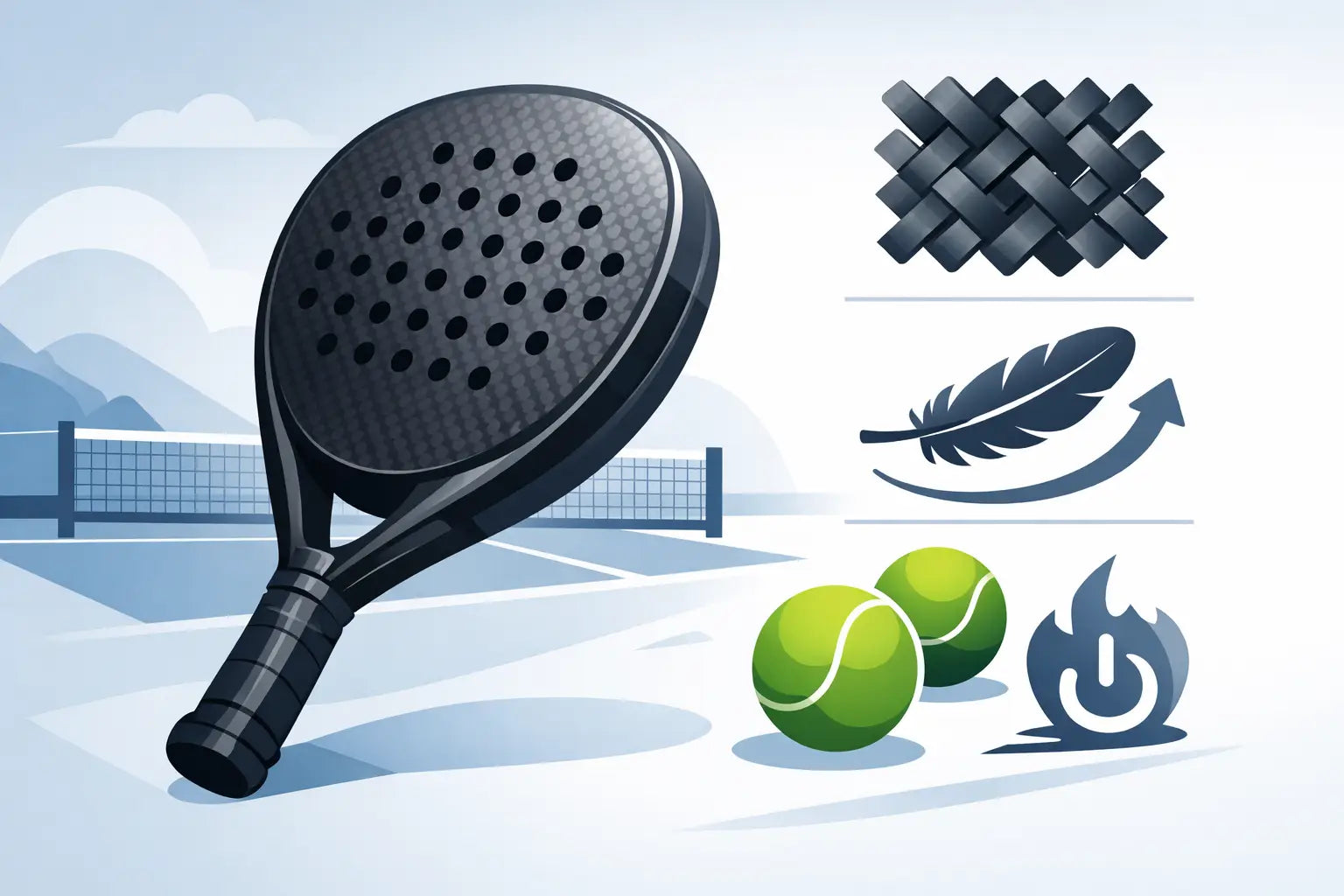

That first hit tells you a lot. Some rackets feel crisp and lively off the face, while others feel softer, calmer and easier on the arm. If you have been comparing models and wondering why they play so differently, eva foam padel racket explained starts with one simple fact - the core changes almost everything.
Inside most padel rackets, EVA foam is the material doing the hard work. It shapes the feel at impact, influences power and control, and affects how forgiving the racket feels when you miss the sweet spot. For UK players choosing between beginner-friendly comfort and sharper competitive performance, understanding the core is not a technical extra. It is one of the fastest ways to buy better.
What EVA foam means in a padel racket
EVA stands for ethylene-vinyl acetate, a dense foam used in the inner core of many padel rackets. It sits between the racket faces and works with the outer materials, such as fibreglass or carbon fibre, to produce the overall response.
When players talk about a racket feeling soft, firm, bouncy or solid, they are often describing the interaction between the face material and the EVA core. The outer layer matters, but the foam underneath is what gives the racket its base character. A firmer EVA core tends to feel more precise and stable. A softer one usually feels more comfortable and easier to access.
That is why two rackets with a similar shape can still play very differently. The core density changes the timing, the rebound and the level of feedback you get through the hand.
EVA foam padel racket explained by feel
The easiest way to understand EVA is by splitting it into softer and firmer setups. Brands may use different names, but the principle stays the same.
A softer EVA core compresses more at impact. That usually gives you a more cushioned feel and a slightly longer contact sensation on the ball. For newer players, that can make the racket feel easier to use because it helps smooth out off-centre shots and reduces the harshness of mishits. If you play socially a couple of times a week and want comfort with accessible power, softer EVA often makes immediate sense.
A firmer EVA core compresses less. The result is a cleaner, quicker response with more direct feedback. Better players often prefer this because it can improve shot accuracy, especially on volleys, bandejas and flatter attacking balls. The trade-off is that it asks more from your timing and technique. If your contact point is inconsistent, a firmer core can feel less forgiving.
Neither option is automatically better. It depends on how you play, how often you play, and what you want the racket to help you with.
How EVA affects power, control and comfort
Players are often told to choose between power and control, but EVA foam influences both in a more subtle way than that.
Softer EVA can help generate easy depth because the racket absorbs and releases energy in a more forgiving way. For players with shorter swings or slower racket speed, this can make the game easier. You do not need to force every shot to get the ball moving.
Firmer EVA tends to reward faster swings and cleaner contact. It can feel less explosive at low pace, but more dependable when you accelerate through the ball. That is why stronger intermediates and advanced players often like a firmer core for controlled aggression. They can create the power themselves and want the racket to stay stable under pressure.
Comfort is where EVA becomes especially relevant. A softer core usually does a better job of muting vibration and reducing the sting of poor contact. If you are managing arm discomfort, returning from injury, or simply dislike an overly hard feel, that matters. A firmer core is not automatically uncomfortable, but it is typically less dampened and more demanding over long sessions.
In British conditions, where colder temperatures can make racket materials feel naturally firmer, this becomes even more noticeable. A racket that feels balanced in summer can feel sharper in winter, so UK players should think about year-round use rather than one idealised test hit indoors.
EVA foam padel racket explained for different player levels
If you are new to padel, the best EVA setup is usually one that helps rather than punishes. That often means a softer or medium-density core paired with a round or hybrid shape. You will get a bigger margin for error, better comfort, and a racket that does not feel twitchy when your timing is still developing.
For intermediate players, the choice becomes more personal. Some want more pop and manoeuvrability, while others want tighter control at the net. This is the stage where medium to firmer EVA starts to appeal, especially if your technique is improving and you are looking for more precision in transitions and defensive resets.
Advanced players usually choose based on their style, not just their level. An aggressive overhead player may want a firmer core and a more attacking shape to keep volleys and smashes sharp. A player who builds points with placement, resets and consistency might still prefer a slightly softer touch. Good players do not all use hard-feeling rackets. They use the setup that suits their tempo.
Junior players are a separate case. They generally benefit from lighter rackets with more comfort and easier handling. The goal is confidence and clean technique, not forcing a professional-level feel too early.
Why EVA density matters more than marketing names
The padel market is full of terms like soft EVA, hard EVA, black EVA, multi EVA and performance EVA. Some of these labels are useful, some are mostly branding. What matters is the density of the foam and how it combines with the face material, weight and shape.
A carbon fibre face with firm EVA will usually feel more responsive and demanding than a fibreglass face with softer EVA. That does not mean one is superior. It means the full racket build has to match the player.
This is where plenty of buyers go wrong. They hear that advanced players use harder rackets and assume that harder means better. In reality, the wrong core can cost you more points than it wins. If a racket feels brilliant on your best shots but punishes the rest of your game, it is not the right fit.
Premium brands and serious challenger brands alike should be clear about this. Technical materials only matter when they translate into usable performance.
How to choose the right EVA foam setup
Start with your current level, but do not stop there. Think about your common miss and your typical match tempo.
If you often feel late on the ball, struggle with consistency, or want more comfort across longer sessions, lean softer. If you already strike the ball cleanly, like a more direct feel and want tighter response at the net, lean firmer. If you are somewhere in the middle, a medium-density EVA core is often the smartest choice because it gives you room to progress without becoming difficult to handle.
Also consider where you play. UK club players are often dealing with colder mornings, damp courts and varied conditions across the year. A racket engineered for British conditions should not just look premium on paper. It should deliver a dependable feel when the weather is less than ideal.
That is part of what makes material selection so important. At PDX Padel, the right EVA setup is not treated as a buzzword feature. It is part of building rackets that give players genuine performance gains without inflated pricing or unnecessary complexity.
Common misunderstandings about EVA foam
One of the biggest myths is that soft EVA is only for beginners. It is not. Plenty of experienced players want comfort, touch and easy ball output. Another is that hard EVA always gives more power. That can be true in the hands of a strong player with fast racket speed, but for many club players it simply feels dead unless they swing well.
It is also worth saying that EVA does not work alone. Shape, balance, surface texture and face material all influence the final result. A diamond-shaped racket with firmer EVA will usually feel very different from a round racket with the same core. You are buying a system, not a single feature.
The best approach is to think less about what sounds advanced and more about what makes your game better next week, not someday.
A good racket should make padel feel clearer. When the EVA core matches your level and playing style, your touch improves, your confidence grows and your choices on court become simpler. That is the kind of technology worth paying attention to.