
Key Takeaways: At A Glance
-
Top Pick for 2026: The PDX Rayo (£74.95) is the overall winner, offering professional-grade materials specifically optimized for British weather conditions.
- The "Golden" Specs: Beginners should strictly look for a round shape (for control) and a weight of 350-365g. Anything heavier than 370g significantly increases the risk of tennis elbow and wrist fatigue.
- Why Climate Matters: Rackets designed for hot, dry Spanish weather often feel slippery and stiff in the UK. For the best performance in typical 10-20°C British conditions, choose equipment engineered for high humidity and indoor play.
- Budget Warning: Avoid rackets under £50. These usually use inferior foam that compresses quickly, meaning they often need replacing after just 3-6 months of regular use.
Quick Answer: What is the Best Beginner Padel Racket in the UK?
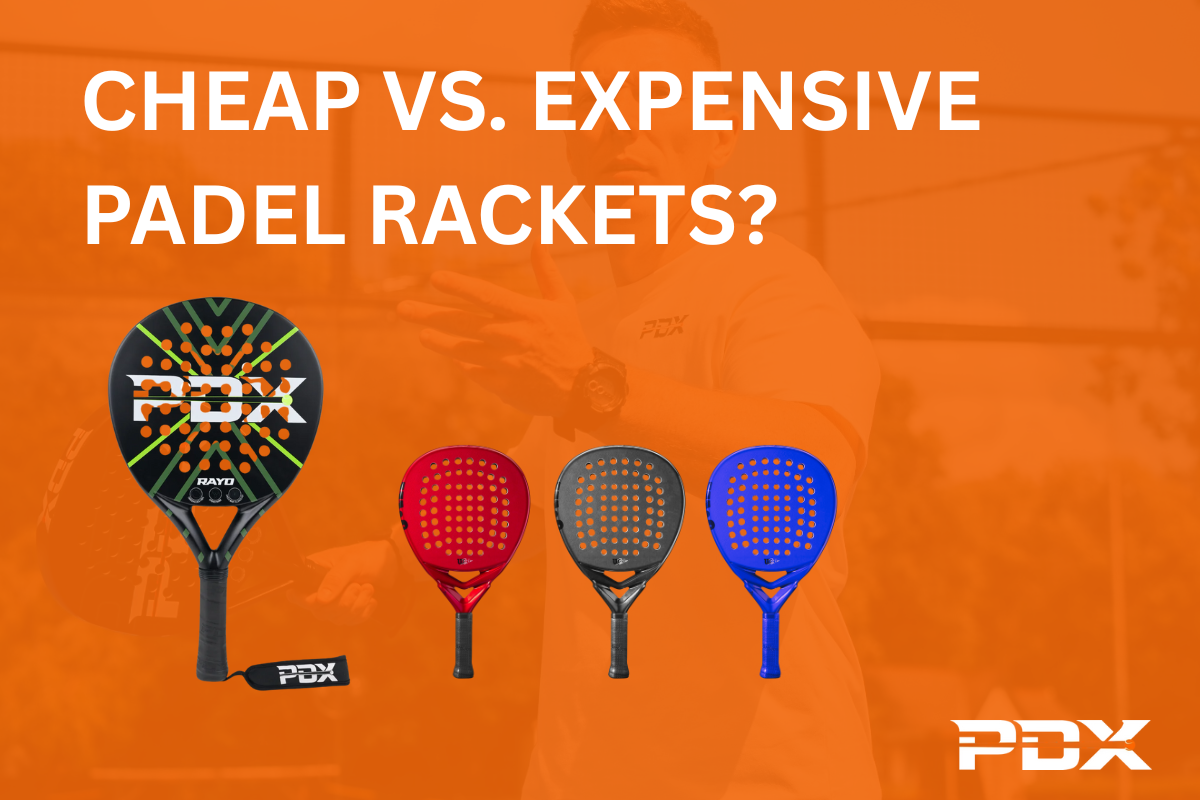
The PDX Rayo (Now £74.95 - Save £15) is our top pick for 2026. Designed specifically for British weather conditions, it features a forgiving round shape, a large sweet spot, and a carbon-reinforced frame that rivals rackets costing £100+. For those who prioritize style without sacrificing performance, the PDX Aurora (£74.95) offers the same high-end specs with a distinctive aesthetic.

What Makes a Great Beginner Padel Racket?
Choosing your first racket can be overwhelming, especially with so many options available online. To avoid tennis elbow, wasted money, and frustration on the court, you need to understand the key features that separate a genuinely beginner-friendly racket from one that's just marketed to beginners.
· Lightweight Design (350-365g): Heavy rackets cause tennis elbow and wrist strain, which is especially problematic when you're still learning proper technique. A racket over 370g will tire you out within 30 minutes of play. A lighter racket like the PDX Rayo (355g) allows you to play for 60-90 minutes without fatigue, which is crucial when you're learning. The ideal range for beginners is 350-365g - light enough to maneuver easily, but heavy enough to provide stability on contact.
· Round Shape: Round rackets have the largest 'sweet spot' - the area of the racket face that produces optimal power and control. For beginners, this is critical because you won't yet have the consistency to hit the center of the racket every time. A round shape means you'll still hit a decent shot even if you make contact 2-3cm off-center. Diamond and teardrop shapes have smaller sweet spots, which makes them unforgiving for new players.
· Soft Core (EVA Foam): Soft cores absorb vibration, protecting your joints (especially your elbow and wrist) and giving you more control over the ball. Hard rackets are designed for power, but they transmit more shock to your arm with every hit. As a beginner, you don't need power - you need control and joint protection. EVA foam cores are the industry standard for beginner rackets because they provide excellent shock absorption while maintaining durability.
Top 8 Beginner Padel Rackets UK 2026
1. PDX Rayo - £74.95 (Editor's Choice)
Why It's #1: The PDX Rayo is designed in the UK specifically for British players and British weather. While Spanish and Italian brands design their rackets for 30°C Mediterranean heat, the Rayo uses materials optimized for the UK's 10-20°C climate and predominantly indoor court play. It offers the build quality and materials of a £120+ racket for just £74.95 (currently on sale from £89.95).
This isn't a 'budget' racket with compromises - it's a mid-range racket at a beginner-friendly price. The carbon-reinforced frame provides durability and responsiveness, while the EVA foam core ensures excellent shock absorption. Over 1,000 UK players have started their padel journey with the Rayo, making it the most trusted beginner racket in the UK market.
Key Specs:
· Weight: 355g (Perfect balance for all-day play)
· Shape: Round (Maximum sweet spot)
· Material: 30% Carbon Fibre / 70% Fibreglass blend
· Core: EVA Soft Foam
· Best For: Complete beginners to intermediate players
>> Shop PDX Rayo - £74.95 with Free UK Delivery

2. PDX Aurora - £74.95 (Best Style Alternative)
Why It's Great: If you love the specs of the Rayo but want a different aesthetic, the PDX Aurora is your match. It shares the same beginner-friendly DNA - lightweight 355g construction, large round sweet spot, and vibration-dampening EVA core - but features a distinctive design that stands out on the court.
The Aurora is particularly popular with female players and those who want their equipment to look as good as it performs. Don't let the stylish design fool you though - this is the same high-quality construction as the Rayo, just with a different visual identity.

3. Wilson Juice Lite - £99
The Premium Brand Option: Wilson is a giant in tennis and a respected name in padel. Their Juice Lite is a solid entry-level racket that's incredibly soft and forgiving, making it a good choice for players with existing injury concerns or those who have had tennis elbow in the past.
The Juice Lite's ultra-soft EVA core provides exceptional vibration dampening - arguably the best in this price range. However, at £99, you're paying a £25 premium over the PDX Rayo for what is essentially similar performance. Unless you specifically need the absolute softest feel possible (for medical reasons), or you strongly prefer the Wilson brand name, the PDX Rayo offers better value.
4. PDX Cub - £59.95 (Best for Kids/Juniors)
Why It's #1 for Kids: Most 'junior' rackets on the market are just cheap toys that break within weeks. The PDX Cub is a proper padel racket engineered specifically for younger players aged 6-12. It's lighter (270g) to prevent wrist injury in developing arms, and has a smaller grip circumference designed for children's hands.
The Cub uses the same quality materials as adult PDX rackets - just scaled down appropriately. This means your child gets a genuine learning tool, not a plastic toy. Many junior players use the Cub for 1-2 years before graduating to the Rayo or Aurora.
>> Shop PDX Cub Junior Racket - £59.95
5. NOX ML10 Pro Cup - £109
Best for Tennis Converts: If you're coming from a high-level tennis background (county level or above), you might find pure round rackets 'too easy' or lacking in power. The NOX ML10 features a teardrop shape, offering more power potential than round rackets while maintaining a reasonably forgiving sweet spot.
NOX is a prestigious Spanish brand used by professional players, so you're getting genuine quality. However, at £109, it's 45% more expensive than the PDX Rayo. For most beginners, this premium isn't justified - but for strong tennis players making the switch, the familiar power-oriented feel can speed up the transition.
6. Head Alpha Motion - £115
The 'Tech' Choice: Head packs a lot of technology into the Alpha Motion, including their proprietary 'Smart Bridge' system and 'Optimized Sweet Spot' frame design. It's stiffer than the Rayo or Aurora, which gives it more power, but also makes it less forgiving for beginners and transmits more shock to your arm.
This racket is better suited as a second racket once you've played for 6+ months and developed consistent technique. At £115, it's also the most expensive option in this guide, making it a significant investment for someone just starting out.
7. Decathlon Kuikma PR990 - £70
The Budget Store Option: Decathlon's Kuikma range is famous for bringing affordable sports equipment to the masses. The PR990 is a decent racket that's perfectly adequate for casual players who only play once a month. The main advantage is that you can walk into a Decathlon store and try it before buying.
However, in direct testing, the finish quality and durability don't quite match the carbon-reinforced frame of the PDX Rayo. The Kuikma uses pure fibreglass construction, which means it's more prone to chips and cracks after 6 months of regular use. At only £4.95 cheaper than the Rayo, most players are better off investing in the superior build quality.
8. Bullpadel Vertex Lite - £89
The Power Option (Advanced Beginners Only): Bullpadel is one of Spain's most prestigious padel brands, and the Vertex Lite is a scaled-down version of their professional racket. It features a diamond shape (head-heavy), which generates significant power on smashes and attacking shots.
Warning: We generally do not recommend diamond-shaped rackets for total beginners. The smaller sweet spot requires accurate ball striking, and the head-heavy balance can be tiring on the wrist, especially for players still learning technique. Only choose this if you're exceptionally athletic (e.g., ex-professional tennis player, squash player) and plan to play 4+ times per week from day one.
Complete Comparison Table
|
Racket |
Deal Price |
Shape |
Weight |
Best For |
|
£74.95 |
Round |
355g |
Best Overall |
|
|
£74.95 |
Round |
355g |
Best Style |
|
|
Wilson Juice Lite |
£99.00 |
Round |
350g |
Max Comfort |
|
£59.95 |
Round |
270g |
Juniors (6-12) |
|
|
NOX ML10 |
£109.00 |
Teardrop |
365g |
Tennis Players |
|
Head Alpha |
£115.00 |
Hybrid |
360g |
Tech Enthusiasts |
|
Kuikma PR990 |
£70.00 |
Round |
365g |
Casual/Budget |
|
Bullpadel Vertex |
£89.00 |
Diamond |
370g |
Athletes Only |
5 Common Beginner Mistakes When Buying Your First Racket
1. Buying Too Cheap (Under £50): Rackets under £50 are typically made from inferior materials that won't last more than 3-6 months of regular play. The foam cores compress quickly, the grips deteriorate, and the frames crack easily. You'll end up spending more money replacing cheap rackets than if you'd invested £75 in a quality option like the PDX Rayo from the start.
2. Choosing Power Over Control: Many beginners see professional players using diamond-shaped 'power' rackets and think they need the same. This is a mistake. Power rackets have small sweet spots and require excellent technique to use effectively. As a beginner, you need control and forgiveness, which only round-shaped rackets provide. Power can be developed later - control must be learned first.
3. Ignoring Weight: A racket that feels fine in the shop can feel like a lead weight after 30 minutes of play. Anything over 370g will cause arm fatigue for most beginners. The ideal beginner weight is 350-365g. If you're unsure, go lighter - you can always add weight with an overgrip later, but you can't remove weight from a heavy racket.
4. Buying Based on Brand Name Alone: Wilson, Head, and Adidas are famous brands, but that doesn't automatically make their beginner rackets better than UK-designed options like PDX. In many cases, you're paying £20-40 extra for a logo, not better performance. Focus on specifications (weight, shape, materials) rather than brand prestige.
5. Not Considering UK Weather: Spanish and Italian brands design rackets for Mediterranean climates (30°C+, dry conditions). In the UK, we play mostly indoors at 15-20°C with higher humidity. Materials that perform well in Spain can feel stiff and slippery in British conditions. UK-designed rackets like the PDX range are optimized for our specific climate.
UK Weather Considerations: Why It Matters
Many players don't realize that padel rackets perform differently depending on the climate. A racket designed for the dry heat of Spain can perform significantly worse in the UK, and here's why:
· Humidity (60-80% in UK vs 40-50% in Spain): The UK's high humidity affects grip tackiness. Grips designed for dry Spanish weather become slippery when exposed to British moisture. This is why many players complain about their expensive Spanish rackets 'feeling slippery' after 20 minutes of play in UK courts. The PDX Rayo comes with a specialized tackier grip compound that maintains friction even in 80% humidity, giving you consistent control throughout your match.
· Temperature (10-20°C UK vs 25-35°C Spain): EVA foam cores harden significantly in cold temperatures. A racket that feels soft and responsive at 30°C in Alicante might feel like hitting with a brick at 12°C in a Manchester winter. This stiffening reduces the sweet spot size and increases shock transmitted to your arm. PDX rackets use foam compounds specifically formulated to maintain their softness and responsiveness in the UK's 10-20°C typical playing temperature range.
· Indoor vs Outdoor Courts: Over 75% of UK padel is played on indoor courts (due to our weather), whereas in Spain/Italy, most play is outdoors. Indoor courts create different ball dynamics - faster ball speed due to climate control, more consistent bounce, and different lighting conditions. UK-designed rackets prioritize control and precision over raw power, which is exactly what you need for the faster-paced indoor game.
When Should You Upgrade to an Intermediate Racket?
We recommend sticking with a high-quality beginner racket like the Rayo or Aurora for at least 6-12 months of regular play (2-3 times per week). You'll know you're ready to upgrade to an intermediate racket like the PDX Tormenta (£119.95) when you can consistently do the following:
· Play 3+ times per week without arm fatigue
· Hit the sweet spot on 90%+ of your shots
· Execute a reliable bandeja or vibora (intermediate smash techniques)
· Feel limited by your racket's power on attacking shots
· Compete regularly in club-level matches
If you're not at this level yet, don't rush to upgrade. Many recreational players happily use the PDX Rayo for 2+ years. Remember: improvement comes from practice and coaching, not expensive equipment.
Frequently Asked Questions
How much should I spend on my first padel racket?
Budget £65-£100 for a quality beginner racket. Under £50 typically means inferior materials that won't last. Over £120 means you're paying for advanced features you don't yet need. The sweet spot is £70-£80, where rackets like the PDX Rayo (£74.95) offer professional-grade materials at beginner-friendly prices.
Can I use a tennis racket for padel?
No. Tennis rackets have strings and are designed for different ball dynamics. Padel rackets have solid faces with perforations. The sports look similar but require completely different equipment. Using a tennis racket for padel would be like using a cricket bat for baseball - technically possible but utterly impractical.
How long will a beginner racket last?
A quality beginner racket like the PDX Rayo should last 12-24 months of regular play (2-3 times per week). Cheaper rackets (£50 or less) typically last only 3-6 months before the foam compresses or the frame cracks. Proper storage (room temperature, in a protective cover) extends lifespan significantly. A thermal racket bag can increase the lifespan of your padel racket.
Final Verdict
For 2026, the winner is clear. For value, performance, and UK-specific design, you can't beat the PDX Rayo (£74.95). It's the racket we recommend to friends, family, and anyone serious about starting padel properly.
Ready to start your padel journey with the right equipment?