
Price tags in padel can get silly fast. One racket promises pro-level power, another leans on branding, and suddenly you are staring at a wall of options wondering what actually counts as the best value padel racket UK players should buy. The short answer is simple: value is not the cheapest racket on the shelf. It is the racket that gives you the right materials, the right shape and the right feel for your level, without charging extra for badge appeal.
That matters even more in the UK, where playing conditions are not always kind to equipment. Damp courts, colder mornings and indoor-outdoor club rotations can all change how a racket feels in the hand. So if you want real value, you need to look past surface-level claims and focus on what genuinely improves performance.
What best value padel racket UK really means
A good-value racket should feel better than its price suggests. That usually comes down to construction. Carbon fibre faces, quality EVA foam and a solid balance between control and power will do more for your game than flashy cosmetics ever will.
The mistake many players make is assuming value means entry-level. It does not. Plenty of lower-cost rackets are cheap for a reason - soft materials, inconsistent sweet spots and a feel that disappears as soon as the pace rises. At the other end, some expensive models give you elite-level materials but package them with a price inflated by retailer margins and big-name sponsorships.
The sweet spot sits in the middle: premium materials, honest pricing and a specification that suits how you actually play.
Start with your level, not the marketing
The right racket for a first-month beginner is rarely the right racket for someone playing three times a week at club level. That sounds obvious, but plenty of players still buy too aggressively. They pick a diamond-shaped, head-heavy racket because it looks serious, then spend the next six weeks struggling with timing and arm fatigue.
If you are new to padel, value usually means forgiveness. A round or hybrid shape with a larger sweet spot helps you defend better, connect more cleanly and build confidence. You will get more from a racket that supports your development than one that punishes every off-centre shot.
If you are intermediate, value shifts slightly. You want enough control to handle pressure at the back of the court, but enough response to finish points when the chance opens up. This is where hybrid shapes and medium-balance rackets often make the most sense.
If you are an advanced player, the equation changes again. You may benefit from a firmer face, a more defined balance point and a shape that complements an attacking game. But even here, value still matters. Paying more only makes sense if the extra performance is real and relevant to your level.
The materials that actually matter
When comparing rackets, materials tell you far more than branding. Carbon fibre is the headline one. In general, a carbon fibre construction gives a cleaner, more stable response than fibreglass, especially when rallies speed up. It tends to offer better durability too, which matters if you play regularly.
Core foam is just as important. EVA foam affects touch, rebound and comfort. Softer foam can feel easier for beginners because it helps generate pace with less effort. Firmer foam often suits stronger or more experienced players who want precision and a more direct connection on impact. There is no universal winner here - it depends on the player.
Textured faces can also add something useful, particularly for spin and grip on the ball. They are not magic, and they will not transform technique on their own, but they can help players who already use slice and kick effectively.
The best value padel racket UK buyers should look for is one where these features are built around performance, not used as buzzwords on a spec sheet.
Shape has a bigger impact than most players realise
Round, diamond and hybrid are not just product labels. They change how the racket behaves.
Round rackets are usually the easiest to use. The sweet spot tends to be more central, which helps with control and consistency. For beginners, casual players and anyone who wants less punishment on mishits, round often delivers the strongest value.
Diamond-shaped rackets usually place more mass towards the head. That can produce more power overhead, but they demand better timing and technique. They are not automatically better - just more specialised.
Hybrid shapes sit between the two and that is why they appeal to so many UK club players. You get a blend of manoeuvrability, control and put-away potential without swinging to either extreme. For plenty of intermediate players, hybrid is where value and versatility meet.
Why UK conditions should influence your choice
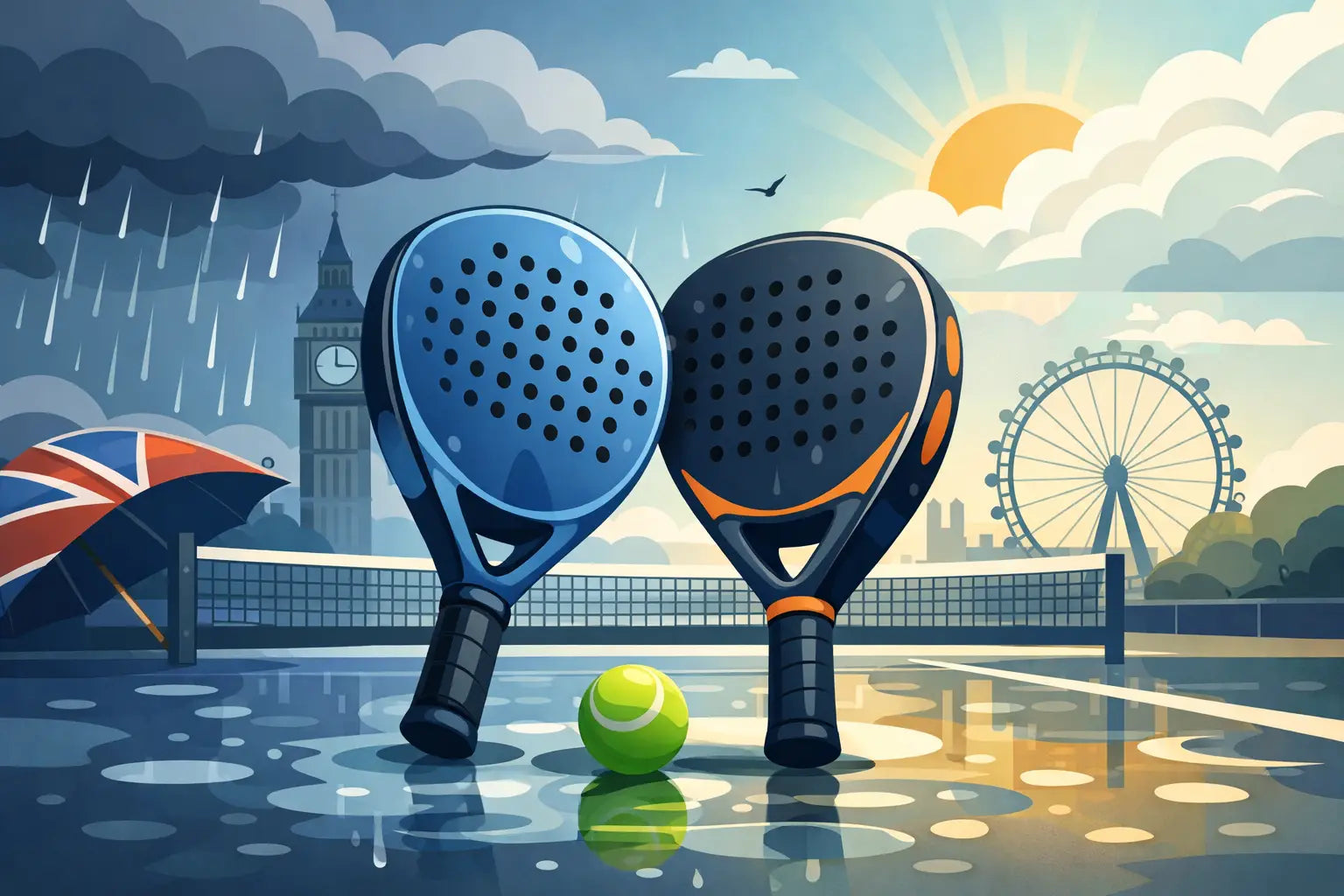
A racket that feels great on a hot Spanish afternoon may not feel quite the same on a cool British evening. Lower temperatures can make some rackets feel firmer. Damp conditions can also affect ball response and the overall speed of play.
That is why players in this market should pay attention to how a racket is engineered and whether the brand understands local conditions. A model that performs consistently across indoor and outdoor UK courts often delivers more practical value than one designed around ideal weather and marketing imagery.
This is one area where a specialist British brand can make real sense. PDX Padel, for example, positions its rackets around premium materials and British playing conditions, which is exactly the kind of thinking value-conscious UK players should pay attention to.
Fair price beats cheap price
Cheap and good value are not the same thing. A very low-cost racket can feel like a bargain until it starts losing shape, deadening on contact or holding back your game after a few months. Then you end up replacing it sooner and spending more overall.
A fair-priced racket should give you proper construction, reliable performance and enough headroom to grow into it. That does not mean overspending for the sake of it. It means buying once, buying sensibly and avoiding both ends of the market trap - disposable beginner gear on one side and prestige pricing on the other.
Direct-to-consumer brands have changed this equation. By removing traditional retail markups, they can offer higher-grade materials at prices that would have looked unrealistic a few years ago. For the buyer, that is often where the best value lives.
How to spot a racket that is overpriced
Usually, the warning signs are easy to spot. The spec is vague, the branding does most of the talking, and the price jumps sharply without a clear reason in materials or performance. If a racket is marketed as elite but does not explain its core, face composition, balance or intended player type, caution is sensible.
You should also be wary of buying based only on what professional players use. Pros have the technique, strength and consistency to handle demanding setups. Most club players do not need the same thing. A racket that flatters your game is better value than one that simply looks aspirational.
Guarantees and support matter too
Value is not only about what happens in a rally. It is also about how confident you feel when buying. Free UK delivery, a sensible trial period and a warranty all reduce risk. That matters when you cannot test every racket in person before ordering.
For newer players especially, these details can make the difference between a smart purchase and an uncertain one. If a brand backs its products properly, that tells you something about confidence in build quality.
So what should most UK players actually buy?
For most beginners, the best choice is a round or forgiving hybrid racket with quality foam and a stable face. It should help you defend, volley and learn without feeling heavy or harsh.
For most intermediates, a hybrid model is often the standout option. You get enough control for tighter matches, enough power to finish points and enough versatility to suit the all-round style common at UK clubs.
For stronger, more advanced players, a firmer carbon construction with a slightly more aggressive balance can be excellent value, provided your technique is ready for it. The trade-off is less forgiveness, so honesty matters.
The smartest way to shop is to ask one question before anything else: will this racket make my next six months of padel better? If the answer is yes because it matches your level, your style and your playing conditions, that is value. Not hype, not inflated pricing, just performance that earns its keep every time you step on court.
Choose the racket that fits your game now, with just enough room to grow, and you will usually end up with the better buy.