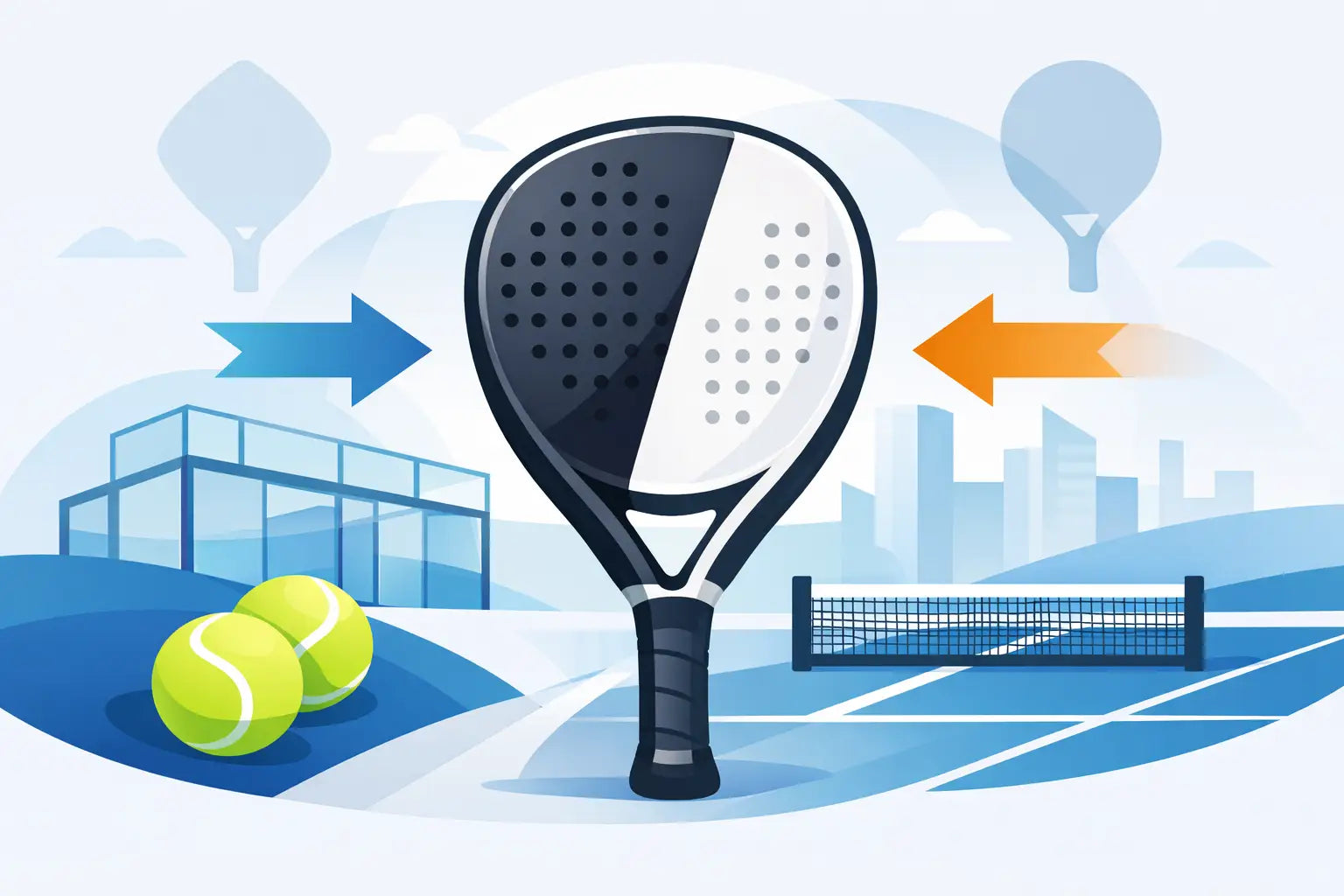

If you are stood on the edge of buying a new racket and stuck on the round or diamond padel racket question, you are not overthinking it. Shape changes how the racket feels in hand, where the sweet spot sits, how easy it is to defend under pressure and how much work you need to do to generate power. Get the shape wrong and even premium materials can feel slightly off. Get it right and your game starts to feel simpler.
For most players, this choice is less about what looks aggressive and more about what helps you win more points on the courts you actually play on. In the UK, that often means mixed conditions, slower balls, damp air and club matches where consistency matters just as much as finishing power.
Round or diamond padel racket - what is the real difference?
A round racket is built around control. Its sweet spot tends to sit closer to the centre of the face, which makes clean contact easier. The balance is usually lower, so the racket feels more manageable through volleys, blocks, defensive pickups and long matches. If you want a racket that forgives slight mistiming and helps you stay solid from the back of the court, round shapes are usually the safer bet.
A diamond racket is designed with more of its mass higher up the frame. That higher balance can help create heavier overheads, sharper attacking volleys and more put-away power when you strike cleanly. The trade-off is that it can feel less forgiving, especially if your contact point drifts or your technique is still developing.
That is why this is never just a power versus control cliché. It is really a question of how consistently you strike the ball, how often you attack above shoulder height and whether you want the racket to help you in defence or reward you in attack.
Who should choose a round padel racket?
If you are new to padel, round is usually the better starting point. Not because it is basic, but because it helps you build proper habits. The larger, more central sweet spot gives you cleaner feedback. You can feel what a centred volley is, what a rushed block feels like and how much touch you need around the net. That matters far more in the early months than chasing extra power.
Round rackets also suit a lot of improving club players who play two or three times a week and want reliability. If your game is built on returning one more ball, resetting points from the glass and staying composed in fast exchanges, a round shape often gives you more usable performance. You do not have to be a beginner to benefit from control.
There is another factor many players overlook - fatigue. A lower-balance round racket is often easier on the arm and shoulder over longer sessions. If you play doubles regularly, where reactions and repeated volleys matter, that easier handling can pay off late in matches.
Round rackets suit these playing styles
A round shape tends to work best for defensive players, all-round intermediates and anyone who values consistency over highlight-reel winners. It is especially useful if you are still refining technique on bandejas, viboras and overhead timing. When your fundamentals improve, control-first rackets do not hold you back. They simply let you access more of your level more often.
Who should choose a diamond padel racket?
Diamond shapes make the most sense for players who actively finish points. If you are regularly taking the net, attacking lobs and looking to apply pressure with overheads, the extra head-heavy feel can give you more penetration through the ball. On clean contact, a diamond racket can feel explosive.
But the key phrase there is on clean contact. If your positioning is late, if you contact too low on the face or if you are often under defensive pressure, a diamond shape can start to feel demanding rather than dangerous. Many intermediate players buy one too early because they want more power, then realise they are losing more points in defence than they are gaining in attack.
For stronger, technically sound players, though, diamond shapes can be a very smart choice. If your mechanics are established and you can generate good racket-head speed, the higher balance helps convert that into a more aggressive ball.
Diamond rackets reward confident attackers
This shape is best for advanced intermediates and experienced players who like to dominate with volleys, overheads and fast hands at the net. It can also suit physically stronger players who prefer a firmer, more decisive response from the racket face.
The trade-off most buyers miss
A lot of players frame the decision too simply. They think round means no power and diamond means no control. Real rackets are not that blunt.
Materials matter. A carbon fibre frame with responsive EVA can make a round racket feel crisp and lively, not soft or passive. Likewise, a diamond racket with the right foam and face construction can still offer decent touch. Surface texture also changes how much grip and confidence you get on sliced shots and controlled volleys.
So shape gives you the foundation, but construction defines the fine detail. That is why premium materials at fair prices matter. A well-made racket does not just fit a category on paper. It gives you performance you can actually feel point to point.
Round or diamond padel racket for beginners, intermediates and advanced players
Beginners should almost always lean round. The game is already new enough without adding a less forgiving shape. You will defend better, return more serves cleanly and get more confidence from the back court. Confidence is not a soft benefit. It is what keeps you swinging freely instead of steering the ball.
Intermediates need to be more honest. If you have decent timing and spend lots of points at the net, a diamond could suit you. If your results still depend on consistency, control under pressure and reducing unforced errors, round is likely the better tool. There is no prize for buying a racket that is harder to use.
Advanced players can go either way based on style. Plenty of high-level players still choose round or near-round shapes because they want precision in volleys and defensive control. Others want the extra sting of a diamond. Your level matters, but your game identity matters more.
What about UK playing conditions?
This is where generic advice from abroad can miss the mark. British players often face cooler temperatures, damp conditions and courts that do not always play as lively as they do in hotter climates. In slower conditions, control and clean ball striking become even more valuable.
That does not mean nobody in the UK should use a diamond shape. It means the racket needs to suit the reality of your local courts, not an idealised version of your game. If you mostly play evening club sessions in cooler weather, a racket that helps you defend and reset points can be worth more than one that only shines when the ball is sitting up perfectly.
If you are between the two, there is a simple answer
If you are torn between a round or diamond padel racket, the safer call is usually round. It gives you more margin, easier handling and more confidence across the widest range of situations. For most players, especially those still improving, that translates into better results faster.
Choose diamond when you know why you want it. Not because it looks more advanced, but because your game genuinely asks for extra top-end power and you have the technique to access it.
A good buying rule is this: if your biggest frustration is lack of control, choose round. If your biggest frustration is that your attacking game feels blunt despite solid technique, consider diamond.
The smartest choice is the one that matches your real game
Padel rewards repeatable quality. The best racket is not the one with the boldest spec sheet. It is the one that helps you play your best brand of padel more often.
For many players, round is the shape that builds confidence, sharpens technique and keeps performance stable from the first game to the last. For others, diamond is the finishing tool that adds bite where it matters most. If you buy with your actual game in mind rather than your aspirational one, you will make a better decision and feel it from the first session.
If you still hesitate, lean towards the shape that gives you one more clean contact, one more controlled volley and one more chance to stay in the point. That is usually where better padel starts.