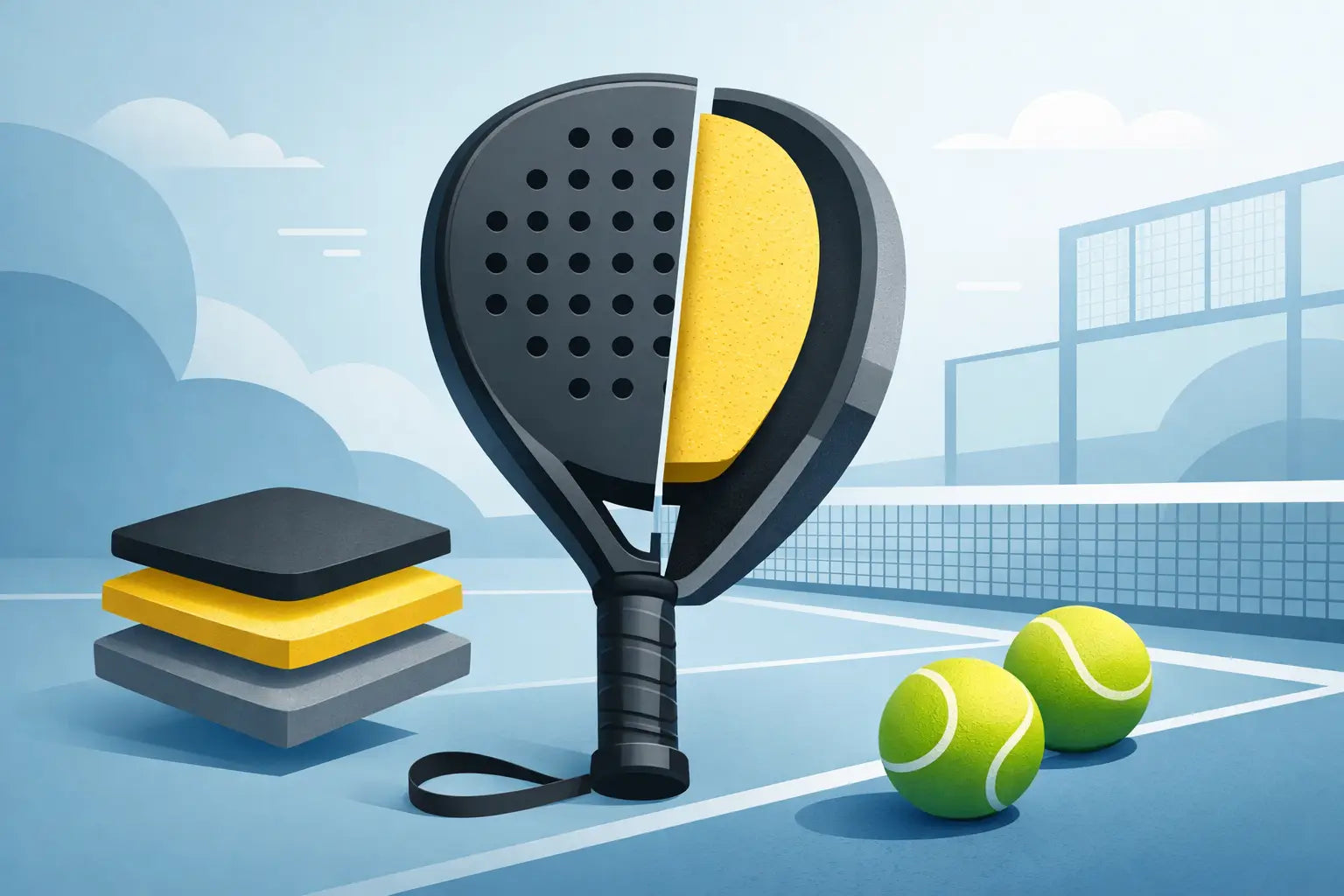

That moment when you catch the ball cleanly and the racket feels solid rather than spongy is usually not your imagination. A big part of that sensation comes down to construction, and carbon fibre padel racket benefits are a major reason more players move away from basic fibreglass frames once they start playing regularly. If you want more confidence on volleys, cleaner power on smashes and a racket that holds its shape over time, carbon fibre is worth understanding properly.
Why carbon fibre matters in padel
Not all racket materials behave the same way on court. Carbon fibre is prized because it is light, stiff and strong, which gives manufacturers more control over how a racket responds at impact. In practice, that means the face and frame can feel firmer and more precise than cheaper alternatives, especially when the pace rises.
For club players, the main appeal is not just that carbon fibre sounds premium. It is that the material can make a racket feel more stable when you block hard balls at the net, more direct when you accelerate through overheads and less prone to losing its performance after heavy use. In the UK, where players often move between indoor and damp outdoor conditions, reliable feel matters even more.
The main carbon fibre padel racket benefits
More control on contact
One of the clearest benefits is control. Carbon fibre tends to create a firmer hitting surface, so the ball does not sink in quite as much as it can with softer, more flexible builds. For many players, that translates to a cleaner, more predictable response.
This is especially noticeable on volleys, bandejas and defensive blocks, where small differences in touch can decide whether the ball stays low or sits up. If you are developing your game and want your racket to respond consistently rather than unpredictably, carbon fibre can help you trust your shots more.
That said, control is not only about the material. The shape, balance and core matter too. A round carbon fibre racket with softer EVA will feel very different from a diamond-shaped model with a harder core. Carbon fibre improves the platform, but the overall setup still needs to match your level.
Better power transfer
When players talk about power, they often assume heavier means stronger. In padel, efficient energy transfer matters more. Carbon fibre’s stiffness helps direct more of your swing into the ball, which can make attacking shots feel sharper and more explosive.
You will tend to notice this most on overheads and aggressive volleys. A carbon fibre racket can produce a more immediate response, so you are not losing as much energy through excess flex in the face. For intermediate and advanced players who can generate decent racket head speed, this can be a genuine upgrade.
For beginners, though, the picture is slightly more mixed. If your timing is still inconsistent, a very stiff carbon fibre racket can feel less forgiving than a softer option. The power is there, but only if you strike the ball well enough to access it.
Stronger durability over time
Durability is one of the most practical reasons players choose carbon fibre. Padel rackets take a lot of punishment, not only from ball impact but from glass, fencing, cold temperatures and the occasional scrape on court. Carbon fibre is valued because it resists deformation well and helps the racket maintain its structure.
That does not mean it is indestructible. Any racket can crack if it takes a bad hit. But compared with lower-grade materials, a well-made carbon fibre construction is generally better equipped for regular use and higher-intensity play.
For buyers who want premium materials at fair prices, this matters. A racket that performs well for longer is not just better to play with. It is often better value.
Greater stability under pressure
As rallies get faster, unstable rackets become obvious very quickly. When you are defending a driven volley or trying to hold firm at the net, torsional stability makes a difference. Carbon fibre helps here because it supports a stronger, more rigid frame and face structure.
The result is less twisting on off-centre hits and a more secure feel when absorbing pace. You still lose some quality on mishits, of course, but the racket is less likely to wobble or feel flimsy through contact. For players moving up from entry-level equipment, this is often one of the first differences they notice.
Lighter feel without sacrificing strength
A good padel racket needs to balance manoeuvrability with solidity. Carbon fibre helps manufacturers keep weight competitive while still building a racket that feels strong and responsive. That is useful for players who want quicker hands at the net without ending up with a racket that feels hollow.
In fast exchanges, a racket that moves quickly can improve reaction volleys and help reduce late contact. Over longer matches, sensible weight distribution can also make the racket easier to handle. Again, this depends on the full specification, but carbon fibre gives more room to fine-tune performance without obvious compromise.
Are there any trade-offs?
Yes, and they are worth being honest about.
A carbon fibre racket will often feel firmer than a fibreglass one, which some players love and others find too demanding. If you are brand new to padel or struggle with arm discomfort, a very stiff setup may not be the best starting point. In those cases, a softer core, round shape or a more forgiving balance can matter just as much as the face material.
Price is another factor. Carbon fibre usually costs more than entry-level materials, although direct-to-consumer brands have made premium construction far more accessible than it used to be. The key question is whether you will benefit from the performance difference often enough to justify the spend. If you play once a month for a casual hit, maybe not. If you play weekly and want your racket to grow with your game, the answer is often yes.
Who benefits most from a carbon fibre racket?
Beginners who want room to progress
A complete beginner does not always need a full carbon fibre racket straight away. Forgiveness, comfort and easy handling are usually the first priorities. But there is a strong case for choosing a well-balanced carbon fibre model if you know you will play regularly and do not want to outgrow your racket too quickly.
The best fit is usually a round or hybrid shape paired with a softer or medium EVA core. That way, you get many of the carbon fibre padel racket benefits without ending up with a racket that feels too unforgiving.
Intermediate players ready for more precision
This is probably the sweet spot. Once you can sustain rallies, defend with some consistency and start attacking with intent, carbon fibre tends to make more sense. You are skilled enough to appreciate the improved response, but still early enough in your development for the upgrade to noticeably sharpen your game.
If your current racket feels vague on volleys or lacks bite on overheads, carbon fibre is often the material players turn to next.
Advanced and competitive players
At higher levels, carbon fibre is less of a luxury and more of an expectation. The pace of play, demand for control and need for durability all increase. Advanced players usually want a racket that reacts quickly, stays stable and rewards full commitment on attacking shots. Carbon fibre fits that brief well.
The exact setup then becomes more specialised. Some players will prefer a hard, head-heavy diamond shape for finishing points. Others will choose a hybrid or round format for more all-court control. The material helps deliver the performance, but the profile still needs to suit the player.
How carbon fibre compares with fibreglass
Fibreglass is not bad. In fact, it can be a very sensible choice for beginners because it tends to feel softer and easier on slower swings. It often offers a more forgiving response and a slightly cushioned sensation on contact.
Carbon fibre, by contrast, is typically crisper, firmer and more performance-led. It usually offers stronger stability, better long-term structure and more precise feedback. If fibreglass feels easy and comfortable, carbon fibre tends to feel sharper and more serious.
Neither is universally better. It depends on how often you play, how developed your technique is and what you want more of from your racket.
Choosing the right carbon fibre setup
Do not buy based on face material alone. Carbon fibre can be excellent, but the wrong shape or balance will still feel wrong in your hand.
If you prioritise control, look towards round shapes and medium balance. If you want more attacking output, hybrid and diamond options will usually suit better. If comfort matters, pay close attention to the EVA core and total weight. A premium material works best when the whole racket is engineered around the player using it.
That is where specialist brands can make the difference. A properly specified carbon fibre racket designed for British conditions should not just feel premium in the product description. It should feel right on court in February as much as it does in July.
A better racket will not fix every part of your game, but the right material can remove a few excuses. If you want cleaner contact, stronger durability and a more confident response under pressure, carbon fibre is not hype. It is one of the clearest upgrades a regular padel player can make.