
You feel it straight away when a racket sits between easy control and clean power. That is usually the point of asking what is a hybrid padel racket - not the shape on paper, but how it actually helps on court when you want confidence from the back glass and enough punch to finish points at the net.
For a lot of UK players, hybrid is the sweet spot. You may not want the ultra-forgiving feel of a fully round racket, but you also may not want the demanding balance and aggressive response that often comes with a diamond shape. A hybrid racket is built to bridge that gap. It gives you a more versatile setup, which is why it is such a popular choice for improving club players and experienced players who want an all-court option.
What is a hybrid padel racket?
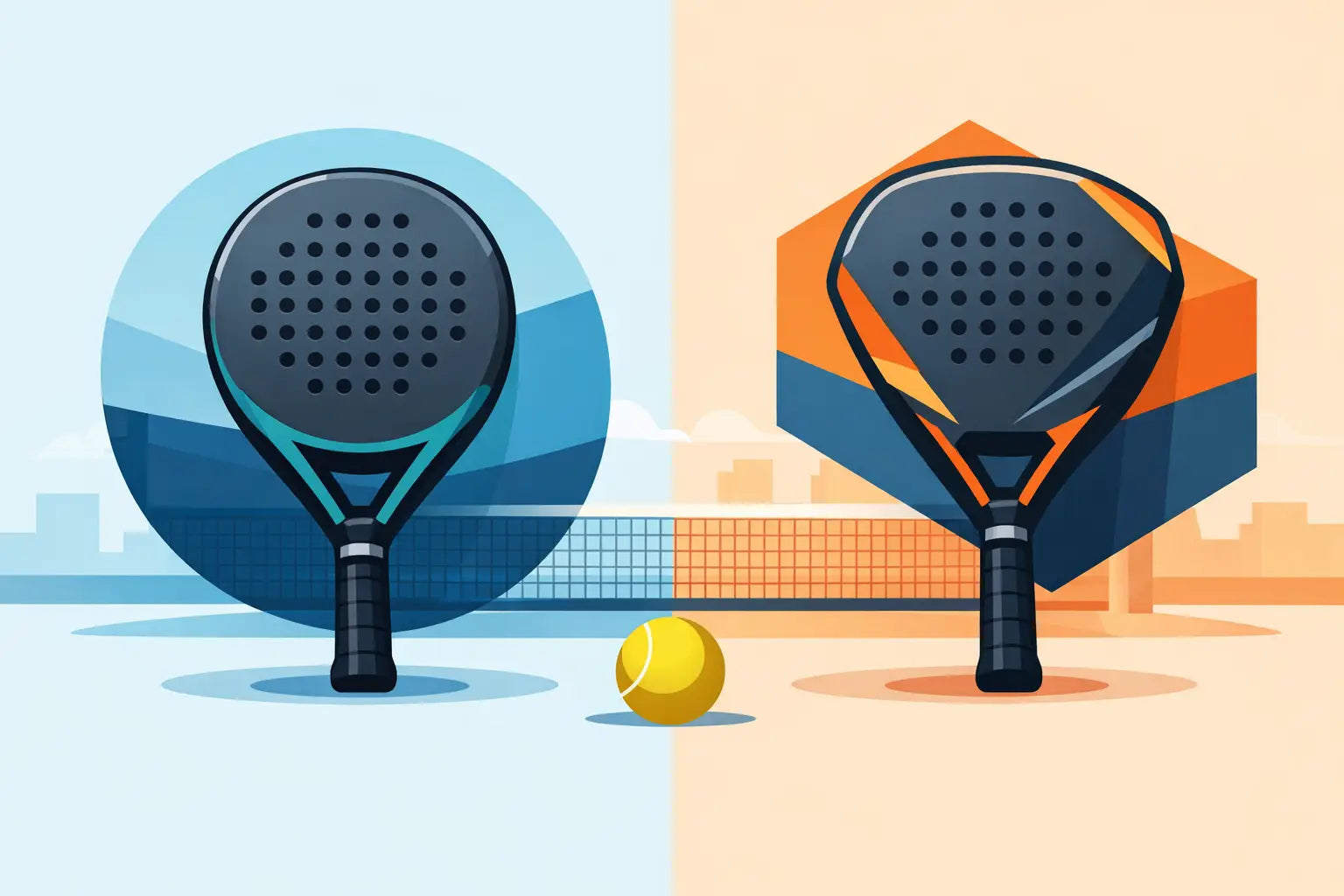
A hybrid padel racket is a racket designed to combine traits from round and diamond shapes. In practical terms, that usually means a teardrop or mixed profile with a balance point that sits closer to the middle rather than heavily at the top or very low in the hand.
The goal is simple. You get a racket that feels more stable and forgiving than an out-and-out power model, while still offering more attacking potential than a classic round control racket. It is not a magic fix for every player, but it is often the most adaptable shape in the bag.
That balance shows up in the way the racket behaves across different shots. Defending from the back court tends to feel more manageable than with a head-heavy diamond racket. Volleys, bandejas and overheads usually come through with more authority than a very control-led round frame. If your game is mixed rather than one-dimensional, hybrid makes a lot of sense.
How a hybrid shape differs from round and diamond
Round rackets are usually built for control, comfort and forgiveness. Their sweet spot tends to sit more centrally, and the balance is often lower. That makes them easier to manoeuvre and more forgiving on off-centre contact, which is why many beginners start there.
Diamond rackets push in the other direction. They are commonly more head-heavy, with a higher sweet spot and a shape designed to generate more power, particularly on aggressive overheads. The trade-off is that they can feel less forgiving and slightly harder to control when timing is off.
Hybrid sits in the middle. It does not remove those trade-offs entirely, but it softens them. You keep enough forgiveness to defend well and enough bite to attack without feeling like the racket is forcing you into one style of play. For many players, that middle ground is exactly what helps them progress.
What a hybrid padel racket feels like on court
This is where shape stops being theory and starts affecting results. A good hybrid racket tends to feel balanced in the hand. It should move quickly enough for reaction volleys, but still carry enough mass through the ball to stop your shots landing short.
From the back of the court, a hybrid shape often gives useful help on controlled lobs, chiquitas and resets because it is not overly demanding. At the net, it tends to offer a cleaner blend of touch and put-away power. You can block, guide and counter, but also speed the ball up when the chance is there.
That is why so many intermediate players gravitate towards it. Their game has moved beyond simply keeping the ball in play, but they are not always best served by a specialised attacking racket. Hybrid lets them develop without boxing them into a power-only setup.
Who should use a hybrid padel racket?
If you are asking what is a hybrid padel racket because you are shopping for your next racket, the better question may be whether your game actually suits one. In many cases, the answer is yes.
Beginners can use a hybrid racket, especially if they are active, athletic or already comfortable with racket sports. It gives room to grow into more aggressive play without jumping straight to a demanding shape. That said, a very new player who values maximum forgiveness may still be better off with a round option first.
Intermediate players are often the clearest fit. If you play regularly at a local club, mix defence and attack, and want one racket that can cover everything reasonably well, hybrid is usually a strong choice. It supports progression without feeling extreme.
Advanced players can also benefit, particularly if they prefer an all-court style. Not every strong player wants a head-heavy power racket. If your game is built on positioning, variation, control in the transition zone and selective aggression, a hybrid frame can feel more complete.
Materials matter as much as shape
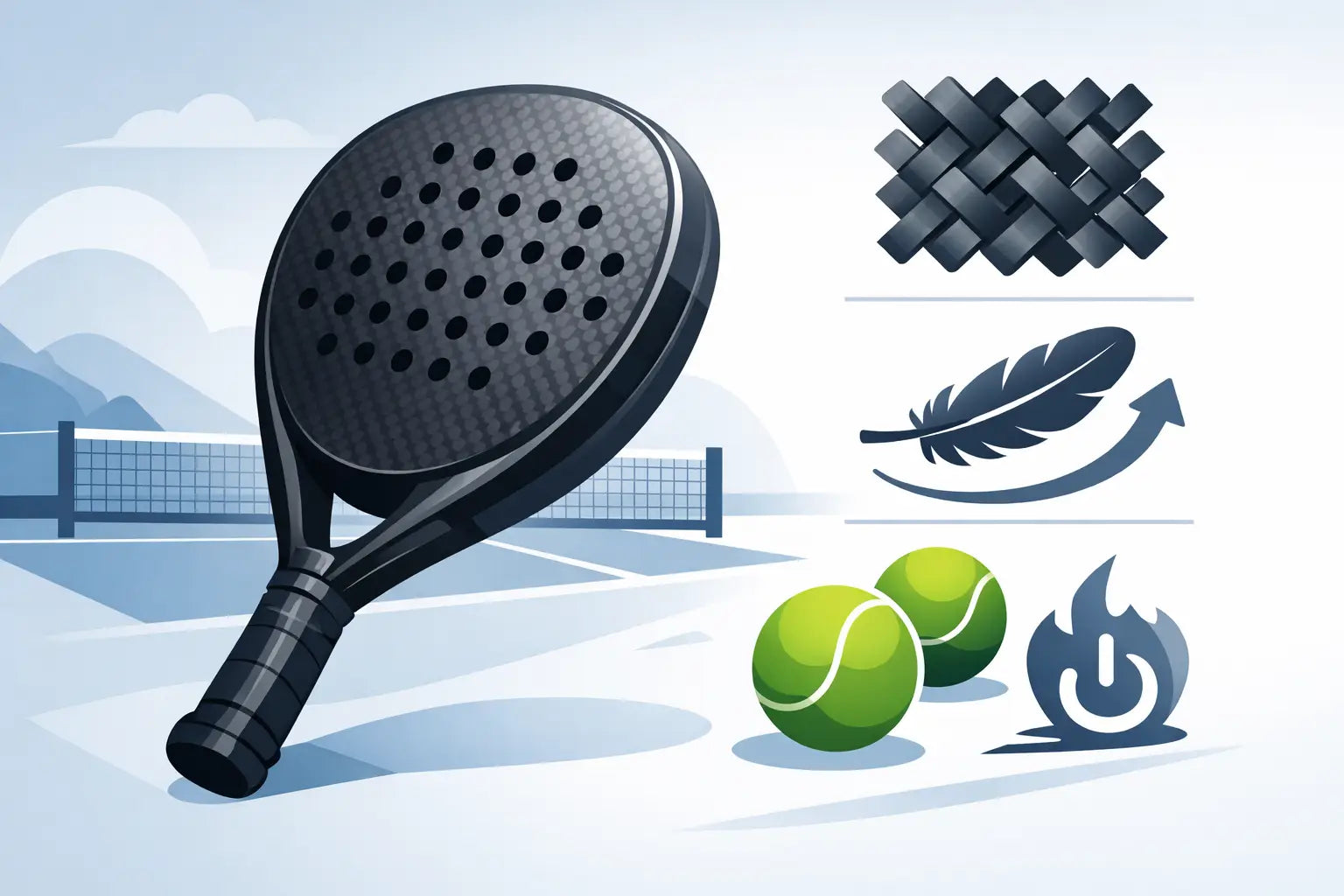
Shape gets the attention, but materials decide a lot of the racket's true character. Two hybrid rackets can look similar and feel completely different if one uses softer foam and a flexible face while the other uses firmer EVA and a stiffer carbon construction.
A carbon fibre frame and face usually create a crisper, more responsive hit and better durability. Firmer EVA foam often gives more precision and a more direct feel, while softer foam can add comfort and help with effortless ball خروج. Surface texture can also play a part by improving grip on the ball for spin and control.
This is why buying by shape alone can be misleading. A hybrid racket with premium materials and a well-judged balance will feel far more convincing than a cheaper model that claims versatility but lacks stability or consistency. In British conditions, where damp courts and heavier balls can influence feel, construction quality matters even more.
The trade-offs of choosing hybrid
Hybrid is versatile, but versatility always comes with compromise. If you want the easiest possible defensive racket, a round shape may still feel kinder. If you want maximum overhead firepower and are happy to work harder for control, a diamond shape may still offer more raw aggression.
Hybrid does not dominate either extreme. It gives you a wider usable range instead. For most players, that is a good deal. For some, especially those with a very fixed playing identity, it can feel like not quite enough of one thing.
That is not a flaw. It is just about being honest on fit. If your game genuinely revolves around control and consistency, lean round. If you are an advanced attacker who lives to finish points above shoulder height, diamond may still be your answer. If you want a racket that can handle a bit of everything well, hybrid earns its place.
How to tell if it is time to move to a hybrid racket
A lot of players outgrow their first racket before they realise it. If your current round racket feels a touch underpowered at the net, or your diamond racket feels hard work in defence, hybrid is often the next logical step.
You might also notice that your level is improving faster than your equipment is supporting it. Perhaps you can generate your own pace now and want more precision on attacking shots, or perhaps you are playing stronger opposition and need a racket that holds up across longer, more varied points. Those are classic signs that a balanced shape could suit you better.
This is especially true for players who train and compete in the UK. Court pace, ball conditions and weather can all affect how demanding a racket feels. A shape that looks brilliant on paper can become less enjoyable if it is too unforgiving on colder evenings or damp mornings. Hybrid tends to be a smart answer because it offers performance without becoming overly niche.
What to look for when buying a hybrid padel racket
Start with balance, not just shape label. One brand's hybrid can feel noticeably more attacking than another's. If possible, check whether the racket is described as mid-balance, and pay attention to how firm or soft the core is.
Then think about your actual level. A lighter, more forgiving hybrid with a larger sweet spot will suit many beginners and intermediates better than a stiff, technical model. More experienced players may prefer a firmer feel, more carbon and a sharper response on volleys and overheads.
Durability also matters. Premium construction, solid drilling patterns and reliable face materials make a difference over time, especially if you play weekly. That is part of the value equation. Fair pricing matters, but so does getting a racket that keeps its feel and performance rather than softening too quickly.
For players comparing options in the UK market, this is where a specialist brand such as PDX Padel stands out. The right hybrid racket should not just sit in the middle on a spec sheet. It should feel engineered for real match play, British conditions and players who want premium materials without inflated pricing.
A hybrid padel racket is not exciting because it tries to please everyone. It works because most players need more than one thing from their racket, and the best choice is often the one that lets your game grow rather than forcing it into a corner.