
If your child is borrowing an adult racket and struggling to get the ball cleanly over the net, the issue usually is not technique. It is often the racket. The best junior padel racket makes the game easier to learn, safer on the arm and far more enjoyable from the first session.
That matters more than most parents expect. Junior players improve quickly when the racket suits their size, strength and coordination. Give them something too heavy, too head-heavy or too stiff, and they start compensating with awkward swings, late contact and sore wrists. Give them the right setup, and they can actually build proper timing and confidence.
What makes the best junior padel racket?
A junior racket should help a child swing freely, find the middle of the face more often and control the ball without overhitting. That sounds simple, but it rules out a lot of rackets sold as "fine for beginners". Many are just lighter-looking versions of adult models, with materials or balances that still feel demanding for younger players.
The first thing to look at is weight. Most junior players need something noticeably lighter than an adult racket, because manoeuvrability is everything at that stage. A racket that feels easy to lift, prepare and recover with will support better habits than one that feels powerful but slow.
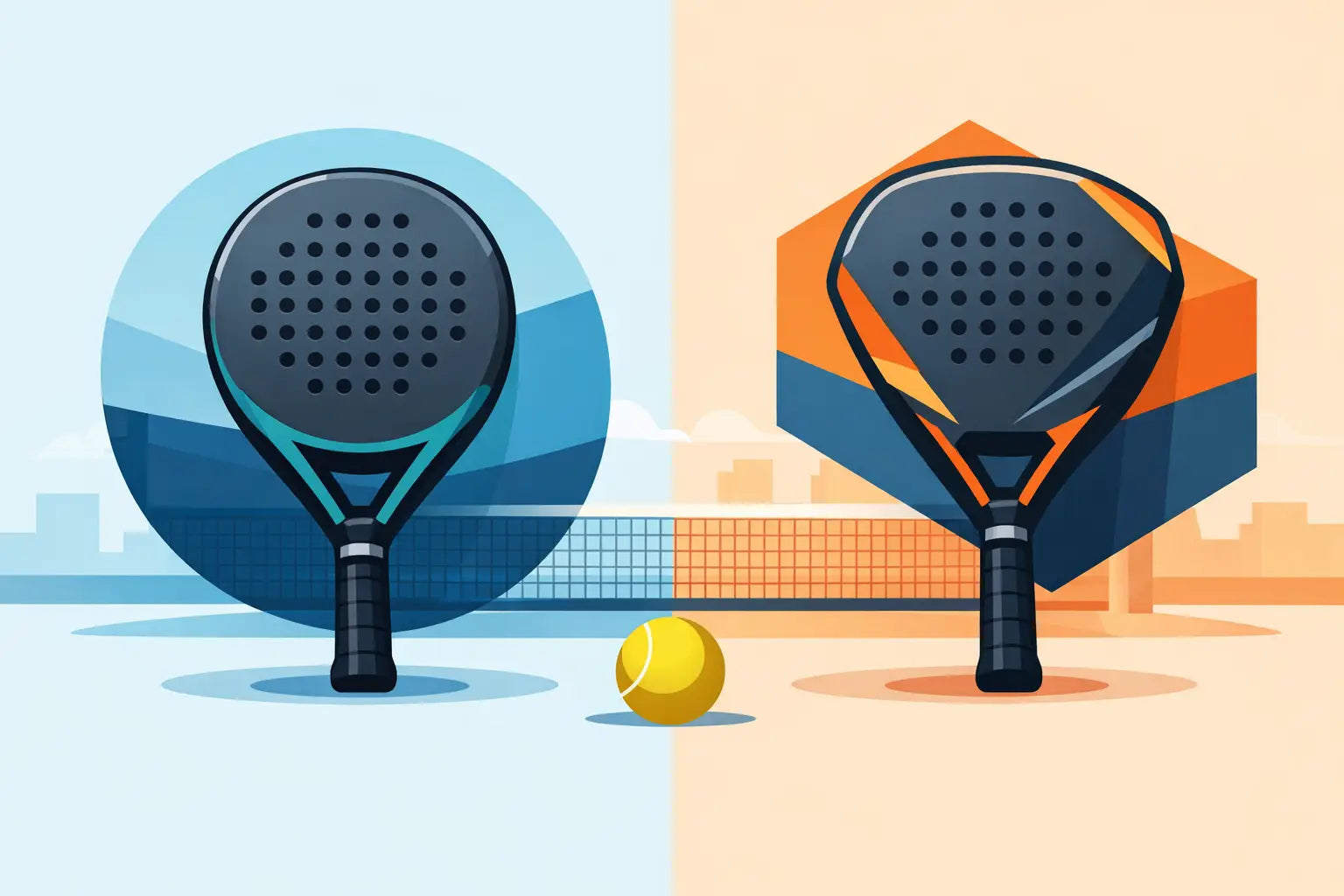
Shape also matters. Round and hybrid shapes are usually the safest place to start. They offer a larger sweet spot and a more forgiving response, which means fewer mishits and less frustration. Diamond shapes can work for stronger, more advanced juniors, but they are rarely the right first choice.
Then there is the feel of the core and face. Softer EVA and more forgiving constructions are generally better for children because they reduce shock and make the racket easier to play with at lower swing speeds. Very stiff carbon-heavy builds can feel impressive in marketing copy, but for many juniors they simply do not give enough help.
How to choose the best junior padel racket by age and stage
Age helps, but ability and strength matter just as much. Two children of the same age can need very different rackets depending on how often they play, how athletic they are and whether they are brand new to racket sports.
For younger beginners
If a child is just starting out, the priority is ease of use. A light racket with a round shape and a soft feel will let them rally sooner and enjoy the game more. At this stage, control is not about precision winners down the line. It is about making consistent contact and learning the basic movements without fighting the racket.
Grip size is worth checking too. If the handle is too thick, children squeeze harder than they should, which can make the wrist and forearm tense. A comfortable handle with an overgrip added if needed is usually a better option than something oversized.
For improving club juniors
Once a junior is playing regularly and starting to understand positioning, volleys and bandejas, they may need a racket with a little more stability and response. This is where a hybrid shape can make sense. It still offers forgiveness, but adds some extra all-round performance.
The key is not to move too quickly into an advanced adult-style racket. Juniors often grow into power naturally. Control, timing and confidence are the harder things to build, so the racket should still support those first.
For stronger, competitive juniors
Older or more developed juniors who train often may be ready for a firmer feel or a slightly more attacking balance. Even then, there is a trade-off. More power usually means a smaller margin for error and a less forgiving response on off-centre hits.
For competitive players, the best junior padel racket is not always the most aggressive one. It is the one they can use well for a full match, under pressure, without their technique breaking down late in games.
Weight, balance and shape - the details that change everything
Parents often focus on brand names first, but performance on court comes down to a few practical features.
Weight is the most obvious. A lighter racket helps with preparation speed, reaction at the net and overall comfort. That is especially important in padel, where quick exchanges and repeated volleys put plenty of demand on the arm and shoulder.
Balance is just as important. A head-light or evenly balanced racket is usually easier for juniors to manoeuvre. Head-heavy rackets can produce more punch, but they also feel harder to control and more tiring over time. For many younger players, that extra effort is simply not worth it.
Shape affects forgiveness. Round shapes give the broadest sweet spot and the easiest learning curve. Hybrid shapes sit in the middle and suit all-round development. Diamond shapes tend to suit advanced players with the technique and strength to handle them.
If you are choosing between two rackets and one is slightly easier to swing, that is often the better decision for a junior. In padel, clean timing beats forced power every time.
Materials matter, but not in the way some buyers think
There is a lot of noise around materials. Carbon fibre, fibreglass, textured faces, advanced cores - they all sound premium, and some genuinely are. But for junior players, the question is not which spec sheet looks best. It is which construction helps them play better now.
Fibreglass and softer combinations often work well for children because they provide a more comfortable, forgiving feel. Carbon can add stability and durability, but if the overall racket becomes too stiff, the player may lose touch and comfort.
That does not mean premium materials are a waste on juniors. Far from it. A well-built racket with quality foam and a smart lay-up will usually feel more consistent and last better. It just needs to be matched to the player rather than chosen for prestige.
In UK conditions, build quality also matters because damp courts, colder temperatures and year-round play can expose cheap construction quite quickly. A junior racket should not feel disposable after a handful of sessions.
What to avoid when buying a junior racket
The biggest mistake is buying an adult racket with the idea that a child will "grow into it". That usually slows progress rather than future-proofing anything. If the racket is too demanding now, it becomes a barrier now.
Another common mistake is choosing based on cosmetics alone. Children naturally like bold designs, and there is nothing wrong with that, but the racket still has to fit their game. A great-looking racket that feels heavy, harsh or awkward will not stay their favourite for long.
It is also worth being cautious with very cheap options. Low price can be appealing for a first purchase, but poor balance, inconsistent materials and uncomfortable grips often mean the racket needs replacing sooner. Value is not about spending the least. It is about buying something that actually helps a child enjoy playing and improve.
How parents can make a confident choice
Start with the player, not the marketing. Think about their age, height, strength and how often they play. Ask whether they need help with control, comfort or confidence more than extra power. In most cases, the answer is yes.
Then focus on a few essentials: manageable weight, forgiving shape, comfortable grip and a construction that does not feel overly stiff. That narrows the field quickly and removes a lot of the guesswork.
If your child is between sizes or stages, lean towards the more forgiving option. A junior who is enjoying the game and striking the ball cleanly will outgrow a racket in a positive way. A junior who is struggling with an overly advanced frame may simply lose confidence.
This is where specialist padel brands tend to make more sense than generic sports retailers. A company that understands player progression, materials and British playing conditions is far more likely to offer a racket that performs properly rather than just filling a price point. That is exactly why brands such as PDX Padel focus on player-specific design rather than inflated badge value.
Best junior padel racket buying advice for UK players
For UK families, there is also the practical side of buying. You want a racket that arrives ready to use, holds up in real club conditions and comes from a brand that stands behind the product. Guarantees, fair pricing and clear product guidance are not extras. They are part of making a smart purchase.
A good junior racket should feel like a step into proper padel, not a compromise. It should help a young player rally longer, move faster and enjoy the sport enough to want the next session. That is the real test.
If you are choosing for a child right now, resist the temptation to buy for where their game might be in a year. Buy for the swing they have today, with just enough headroom for progress. That is usually where the best decisions are made.