
The sweet spot is the area on a padel racket face that delivers the most power and control with the least vibration. A larger, lower sweet spot is more forgiving and best for beginners. Round rackets have the largest, most central sweet spot, while diamond rackets have a smaller, higher sweet spot.
Key Takeaways
- The sweet spot is the area of the racket face that produces the most power and control with the least vibration.
- Round padel rackets have the largest, most central sweet spot, making them the most forgiving shape for beginners.
- Diamond rackets have a smaller, higher sweet spot that rewards advanced players with power but punishes off-centre hits.
- A bigger sweet spot gives more consistent control and reduces vibration on mishits.
- The PDX Rayo and PDX Aurora are the most forgiving PDX rackets thanks to their round shape and soft fibreglass face.
What is the sweet spot on a padel racket?
The sweet spot is the central area of a padel racket face that produces the cleanest, most powerful shot with the least vibration. When you hit the ball inside this zone, the racket responds efficiently and the ball flies off the face with control.
Every racket face has a sweet spot, but its size and position vary with the racket's shape, weight distribution and materials. A large sweet spot tolerates off-centre contact, meaning a mishit still travels with reasonable pace and direction. A small sweet spot demands precise timing — miss it and the shot loses power, the racket twists in your hand, and vibration transfers to your arm. Understanding sweet spot size is the single fastest way to choose a racket that matches your skill level, because it directly determines how forgiving the racket feels during play.
Where is the sweet spot located?
The sweet spot sits near the centre of the racket face, but its exact position depends on the racket's shape and balance. On a round padel racket the sweet spot sits low and central, close to the handle, where the face is densest and most stable.
On a diamond racket the sweet spot shifts higher, towards the top of the face, because the weight is concentrated in the head. A teardrop or hybrid racket places the sweet spot centrally, splitting the difference between round and diamond. Where the sweet spot sits changes how you play: a low sweet spot rewards the shorter, compact swings typical of beginners and defensive players, while a high sweet spot suits the overhead smashes and aggressive net play of advanced players. If you contact the ball outside the sweet spot on any racket, the shot feels dead — so knowing the zone's position helps you time your strike.
How shape changes the sweet spot (round vs teardrop vs diamond)
Racket shape is the biggest factor that changes sweet spot size and position. Round rackets produce the largest, lowest, most central sweet spot; diamond rackets produce the smallest, highest sweet spot; teardrop and hybrid rackets sit in between. The shape determines where the mass sits, and mass location governs how the face responds to the ball.
| Shape | Sweet spot size | Position | Forgiveness |
|---|---|---|---|
| Round | Largest | Low, central | Highest |
| Teardrop / Hybrid | Medium | Central | Medium |
| Diamond | Smallest | High | Lowest |
A round shape spreads mass evenly, so the face flexes uniformly and forgives mishits. A diamond shape concentrates mass at the top, giving power on high contact but a smaller effective zone. For a deeper comparison of how each shape plays, read our guide to padel racket shapes explained. In our experience PDX players find that round shapes help them keep the ball in play far longer during their first months on court.
Why a bigger sweet spot is better for beginners
A bigger sweet spot is better for beginners because it forgives the off-centre contact that every new player makes. When you are learning, your timing and footwork are inconsistent, so you regularly strike the ball away from the face's centre. A large sweet spot keeps those mishits playable.
A round racket with a large, central sweet spot means a slightly mistimed drive still clears the glass and a defensive block stays low. It also reduces vibration, which protects your elbow and wrist during long sessions. A small sweet spot, by contrast, punishes the same errors — the racket twists, the ball dribbles off the face, and your arm absorbs the shock. That is why coaches consistently recommend the most forgiving padel racket for newcomers. Pairing a big sweet spot with a lighter weight further eases handling; see our padel racket weight guide for the full breakdown.
How to hit the sweet spot more often
You hit the sweet spot more often by choosing a forgiving racket, keeping a relaxed grip, and making contact in front of your body at a comfortable height. Technique and equipment work together — even the best racket cannot fix a cramped, tense swing.
Start with a round, forgiving racket that has a large sweet spot, such as one from our beginner padel rackets collection. Hold the grip loosely so the racket head stays stable rather than locked; tension in your wrist causes the face to angle and pushes contact off-centre. Position yourself so the ball arrives between hip and chest height, then strike with a compact motion in front of your lead foot. Watch the ball onto the face rather than glancing at the target too early. Practise slow, controlled rallies to groove the contact point — repetition builds the muscle memory that makes finding the sweet spot automatic.
Which PDX rackets have the most forgiving sweet spot?
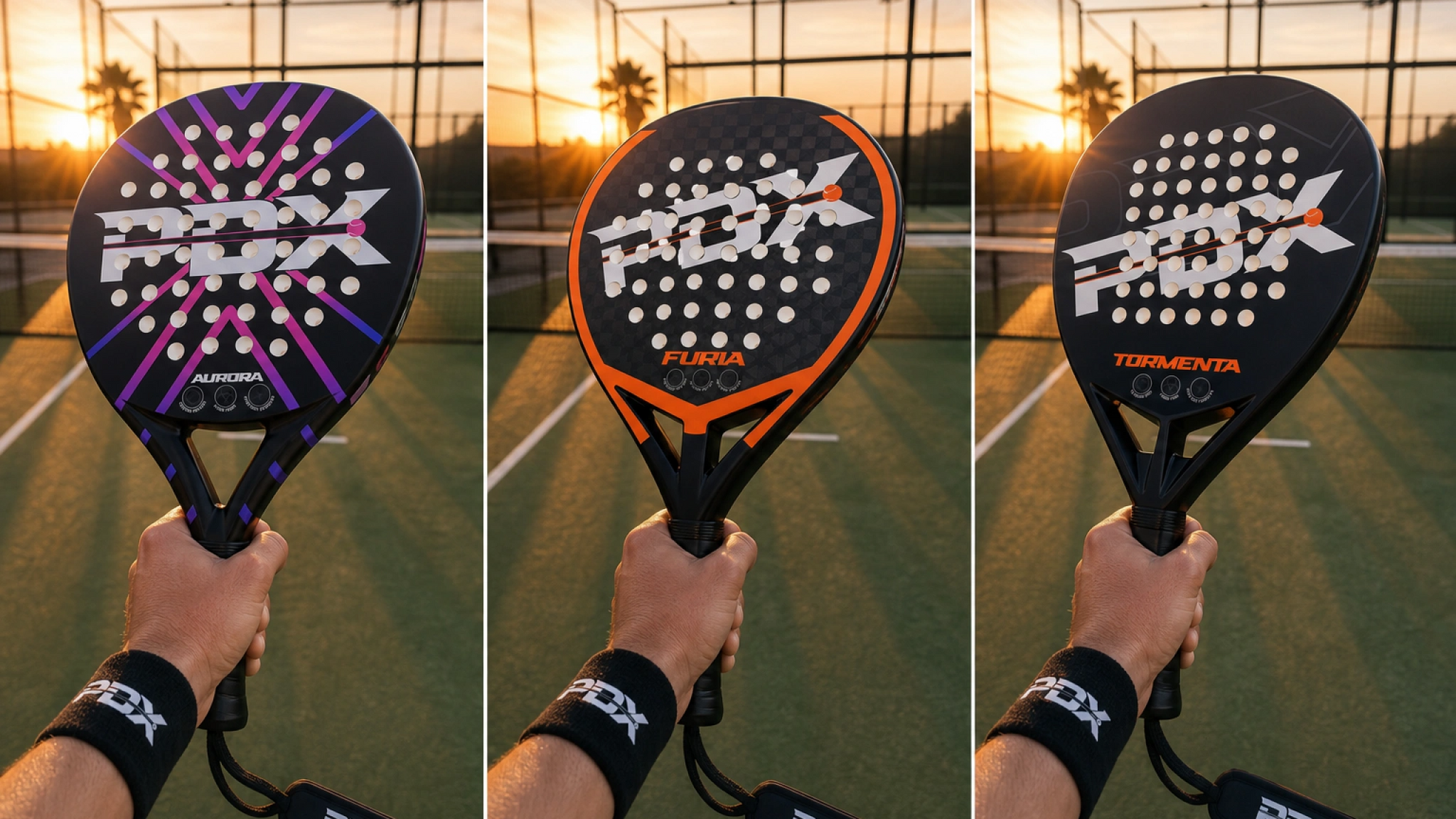
The most forgiving PDX rackets are the round-shaped beginner models, which pair a large, central sweet spot with a soft fibreglass face. The PDX Rayo and PDX Aurora are the clearest examples, followed by the junior PDX Cub for younger players.
| Level | Shape | PDX racket | Price |
|---|---|---|---|
| Most forgiving (beginner) | Round | PDX Rayo / PDX Aurora | £69.95 |
| Kids 6–12 | Round | PDX Cub | £59.95 |
| Balanced (improving) | Hybrid | PDX Furia | £139.95 |
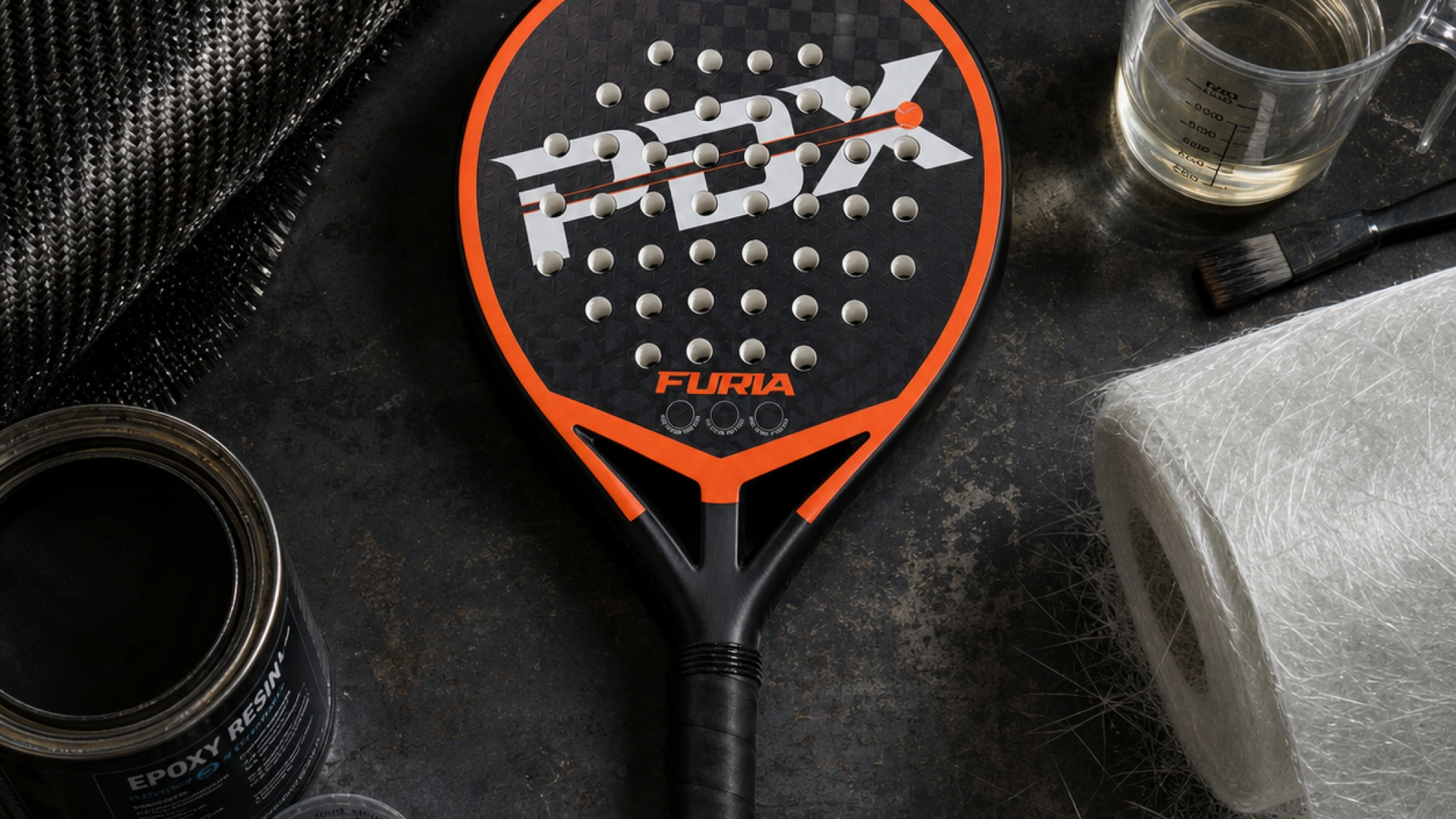
The PDX Rayo beginner racket weighs 355g with a soft fibreglass face on a 30% carbon / 70% fibreglass frame, giving the largest, most forgiving sweet spot in the range. The PDX Aurora offers the same forgiving geometry in a matching spec. The PDX Cub brings that same round forgiveness to juniors at 270g. Improving players who want a slightly smaller, more powerful sweet spot can step up to the hybrid PDX Furia with its 12K carbon face. For the full beginner framework, see our ultimate beginner's guide to padel rackets and the main padel racket guide.
FAQ
What is the sweet spot on a padel racket?
It is the area of the face that gives the most power and control with the least vibration. Hitting it consistently makes your shots cleaner and more powerful.
Where is the sweet spot on a padel racket?
On round rackets it sits low and central. On diamond rackets it sits higher towards the top of the face.
Which padel racket has the biggest sweet spot?
Round rackets have the largest sweet spot, which makes them the most forgiving and the best choice for beginners.
Does a bigger sweet spot mean more control?
Yes. A larger sweet spot is more forgiving on off-centre hits, giving you more consistent control.
How do I hit the sweet spot more often?
Choose a round, forgiving racket, keep a relaxed grip, and make contact in front of your body at a comfortable height.
Ready to find your most forgiving racket? Browse our beginner padel rackets collection and pick a round, large-sweet-spot model that keeps every mishit in play.