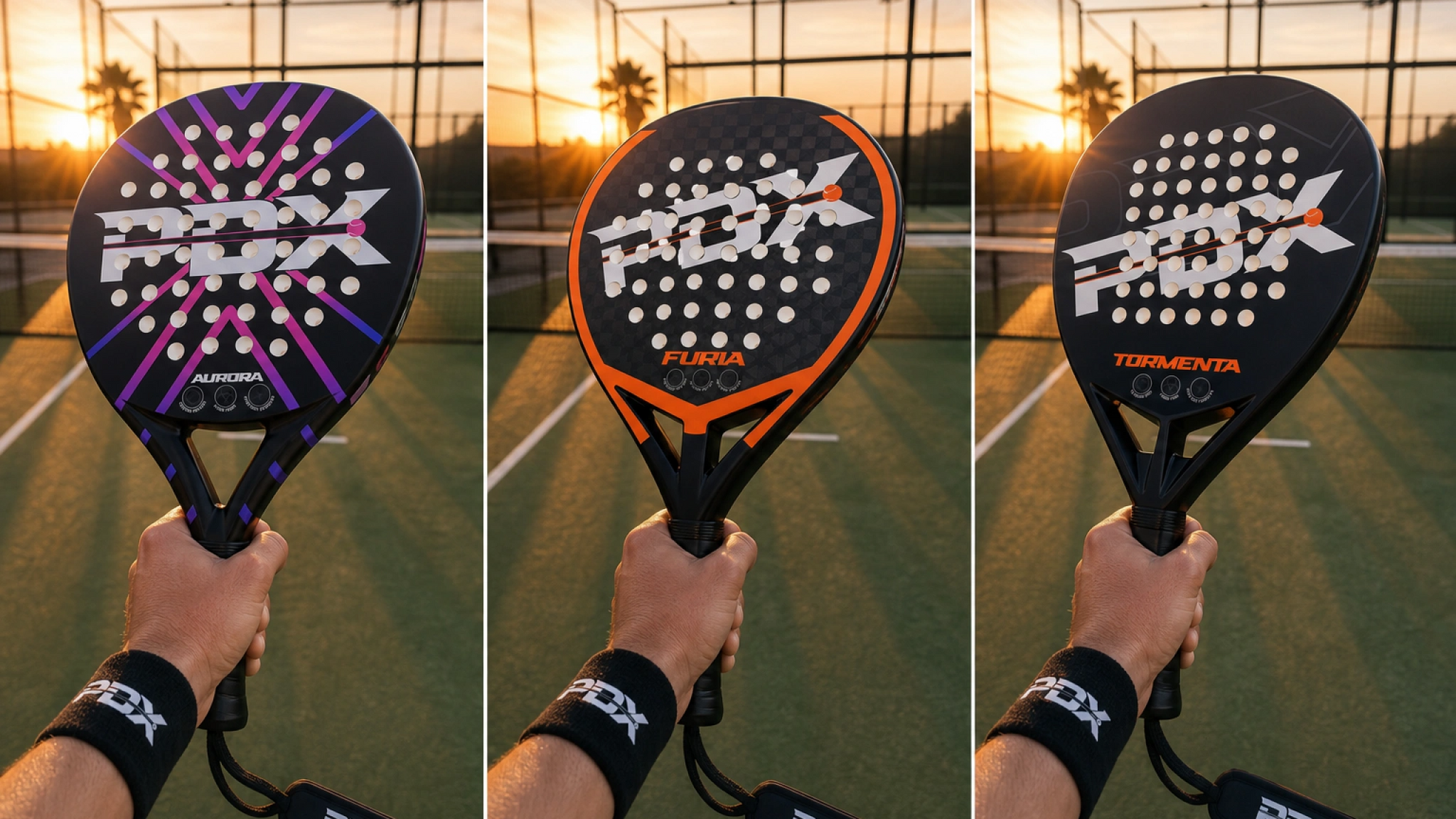

The core is the foam inside a padel racket that controls how it feels and plays. Soft EVA foam gives more comfort, control and a larger sweet spot, making it ideal for beginners. Hard EVA foam returns more power and suits advanced players. Most beginner rackets, including the PDX Rayo and Aurora, use a soft EVA core.
Key Takeaways
- The core is the EVA foam inside the racket that determines feel, power and comfort.
- Soft EVA foam gives beginners more comfort, control and a larger sweet spot.
- Hard EVA foam returns more power but is harsher on the arm and less forgiving.
- A hard core with high vibration can contribute to tennis elbow.
- Cores lose their pop after 12–24 months of regular play and should be replaced.
What is a padel racket core?
A padel racket core is the layer of foam sandwiched between the frame and the face surfaces. It is the engine of the racket, absorbing the ball on impact and then releasing that stored energy back into the shot. Unlike a tennis racket string bed, the padel core is solid foam, which means the material and density of that foam directly shape every shot you play. The core works together with the face material and the racket shape to determine overall feel — a combination covered in our padel racket guide. Understanding the core matters because two rackets with identical shapes and faces can play very differently if one has a soft EVA core and the other a hard one. Core density is the single biggest factor in whether a racket feels comfortable or punishing on the arm.
What is EVA foam?
EVA stands for ethylene-vinyl acetate, a rubber-like polymer foam used in most quality padel rackets. EVA foam is denser and more durable than the soft polyethylene foam found in cheaper rackets, and it retains its bounce — its "pop" — for longer. Manufacturers tune the density of the EVA to produce soft, medium or hard cores, which is why the same material appears across a range of rackets. EVA's resilience makes it the industry standard for rackets above the cheapest entry level. It compresses on ball impact, stores that energy, and returns it into the shot, producing the trampoline effect that defines a padel racket's feel. When comparing a carbon fibre vs fibreglass padel racket, remember that the face material only matters because the core sits behind it doing the real work of absorbing and returning energy.
Soft EVA vs hard EVA: what's the difference?
The difference between soft and hard EVA is density. Soft EVA compresses more on impact, giving a longer dwell time — the ball sits on the face fractionally longer — which translates to more control, comfort and forgiveness. Hard EVA compresses less and snaps back faster, returning more energy into the ball for greater power but demanding better timing. A soft core enlarges the effective sweet spot because it flexes across a wider area, while a hard core concentrates response in a smaller zone. In our experience, PDX players find that soft EVA feels plush and trampoline-like, whereas hard EVA feels crisp and explosive. The trade-off is always power versus forgiveness: soft cores sacrifice top-end power for consistency, hard cores sacrifice consistency for raw speed on well-timed shots. Medium EVA sits between the two, offering a balanced feel for improving players who want a bit of each.
How the core affects power, control and comfort
The core density directly maps to three playing characteristics. Power comes from how fast the core returns energy: hard EVA snaps back quickly, generating faster ball speeds on solid contact. Control comes from dwell time and absorption: soft EVA holds the ball longer, letting you direct the shot with touch and precision. Comfort comes from vibration dampening: softer foam absorbs more of the shock that travels through the frame into your arm. A soft core therefore suits players who prioritise placement and arm health, while a hard core rewards aggressive players who hit the ball cleanly and want maximum pace. The interaction with weight matters too — a heavier racket with a hard core amplifies both power and strain. Read our padel racket weight guide to understand how weight compounds the core's effect on your arm and overall feel.
Can the core cause arm pain or tennis elbow?
Yes, the core can contribute to arm pain and tennis elbow. A hard EVA core transfers more vibration to the wrist, elbow and shoulder on every hit, especially on off-centre contact. Players who already experience elbow discomfort should avoid hard cores and stiff carbon faces, which together transmit the most shock. A soft EVA core paired with a fibreglass face absorbs vibration best and is the recommended combination for anyone with arm issues. Technique also plays a role — tight grips and late contact magnify shock regardless of core — but the core density is the equipment factor you can control most directly. If you feel pain developing, switching to a softer core is the first adjustment to make before changing anything else. Rest, a relaxed grip and a forgiving racket together address most early-stage arm complaints.
Which core is best for beginners?
A soft EVA foam core is the best choice for beginners. It provides the comfort, control and large sweet spot that new players need while they develop consistent technique. Beginners hit off-centre shots frequently, and a soft core forgives those mistakes rather than punishing the arm. The extra dwell time also helps with touch shots like the bandeja and controlled lobs, which are foundational skills in padel. A hard core, by contrast, demands precise timing that beginners have not yet built, leading to inconsistent shots and potential arm strain. The PDX Rayo beginner racket and PDX Aurora both use a soft EVA core paired with a forgiving fibreglass face, making them the strongest beginner picks in the range. For a deeper walkthrough, see our beginner padel racket buyer's guide.
Which PDX racket core suits you?
The right core depends on your level, playing style and arm comfort. Beginners and anyone with arm sensitivity should choose a soft EVA core. Intermediate players ready for more power can step up to a firmer core. The table below maps each PDX racket to its core type, price and intended level.
| Level | Core type | PDX racket | Price |
|---|---|---|---|
| Beginner / arm comfort | Soft EVA | PDX Rayo / Aurora | £69.95 |
| Kids 6–12 | Soft EVA | PDX Cub | £59.95 |
| Intermediate+ (firmer, powerful) | Firmer EVA | PDX Tormenta / Furia | £99.95 / £139.95 |
Core comparison at a glance
| Core | Feel | Power | Control | Best for |
|---|---|---|---|---|
| Soft EVA | Comfortable, forgiving | Lower | Higher | Beginners, arm comfort |
| Medium EVA | Balanced | Medium | Medium | Improving players |
| Hard EVA | Firm, lively | Higher | Demanding | Advanced players |
FAQ
What is the best padel racket core for beginners?
A soft EVA foam core is best for beginners because it is more comfortable, more forgiving and gives a larger sweet spot.
What is the difference between soft and hard EVA foam?
Soft EVA is more comfortable and controlled. Hard EVA returns more power but is harsher on the arm and less forgiving on off-centre hits.
What is the difference between EVA and FOAM cores?
EVA is a denser, more durable rubber foam used in most quality rackets. Soft polyethylene FOAM is softer and cheaper but loses its pop faster.
Does a padel racket core cause tennis elbow?
A hard core with high vibration can contribute to arm pain. Beginners and players with arm issues should choose a soft EVA core and a fibreglass face.
Does a padel racket core lose its pop?
Yes. Over time the foam compresses and the racket loses power and feel, typically after 12-24 months of regular play.
If you are ready to pick a racket with the right core for your game, browse the beginner padel rackets collection for soft EVA options, or explore the intermediate padel rackets range for firmer, more powerful cores.