
You step onto the court. You hit the ball. It flies straight into the glass.
Again.
It is easy to blame your technique. But if you are playing with the wrong padel racket, you are fighting a losing battle before the match even begins.
When you first start playing, every racket looks the same. Just a solid paddle with some holes drilled into it. But unlike tennis, padel rackets do not have strings to generate power or spin. The magic, the control, the speed, the raw power, it all comes entirely from the racket's shape, core, and weight distribution.
A racket built for an aggressive, smashing net player will feel completely uncontrollable in the hands of a defensive baseline player. Worse still, playing with the wrong balance is the fastest way to develop a nasty case of padel elbow.
If you are looking to upgrade your gear, you need to understand exactly what you are buying. Here is the honest breakdown of whether padel rackets actually make a difference, and how to choose the right one for your game.
Do Padel Rackets Actually Matter?
Let's be real about what improves your padel performance before we talk about rackets:
| Factor | Impact Level | You Control It? |
|---|---|---|
| Coaching / lessons | ⭐⭐⭐⭐⭐ | Yes |
| Regular practice | ⭐⭐⭐⭐⭐ | Yes |
| Court time / match experience | ⭐⭐⭐⭐⭐ | Yes |
| Fitness & mobility | ⭐⭐⭐⭐ | Yes |
| Your racket | ⭐⭐⭐ | Yes |
| Your shoes | ⭐⭐ | Yes |
| Expensive gear | ⭐ | Sort of |
A £150 racket in the hands of a beginner plays worse than a £60 racket in the hands of someone who has had five lessons. That is not opinion. That is physics and biomechanics.
The racket matters. But it is maybe 15-20% of your overall performance picture.

When Does a Padel Racket Actually Make a Difference?
1. Injury Prevention
This is the big one nobody talks about.
Cheap, heavy rackets with poor balance can wreck your elbow, shoulder, and wrist. Tennis elbow (lateral epicondylitis) is common in padel, and a lot of it comes from using the wrong equipment. According to a systematic review of padel injuries published in BMJ Open Sport & Exercise Medicine, upper limb injuries account for a significant portion of padel-related injuries, with equipment choice being a contributing factor.
What helps:
- Lower weight (340-360g for most recreational players)
- Round shape (more control, less demand on your arm)
- Soft core (absorbs shock better)
- Good balance (head-light reduces strain)

2. Consistency and Control
Beginners and intermediates do not need power. They need the ball to go where they intend it to go.
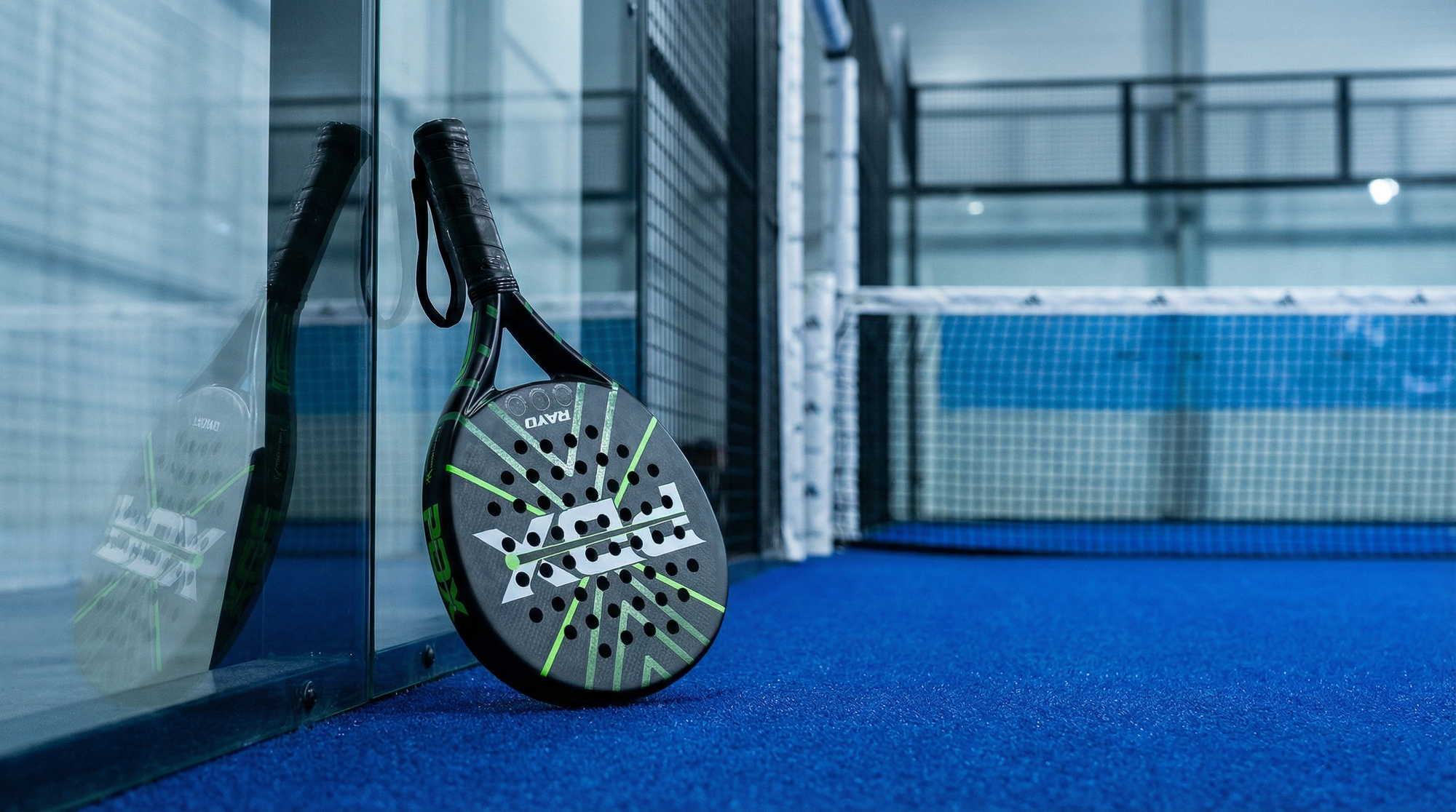
Round-shaped rackets like the PDX Aurora and PDX Rayo have a larger sweet spot. Miss-hit a shot and the ball still behaves predictably. Diamond-shaped power rackets? Miss the sweet spot and the ball flies into the fence or drops dead at your feet.
The right racket makes the game less frustrating. That keeps you playing. That is how you actually improve.
3. Enjoyment and Confidence
When you are playing with equipment that feels right (not too heavy, not too stiff, not too unwieldy), you focus on the game, not on your gear. That flow state is where improvement happens.
The Three Padel Racket Shapes Explained
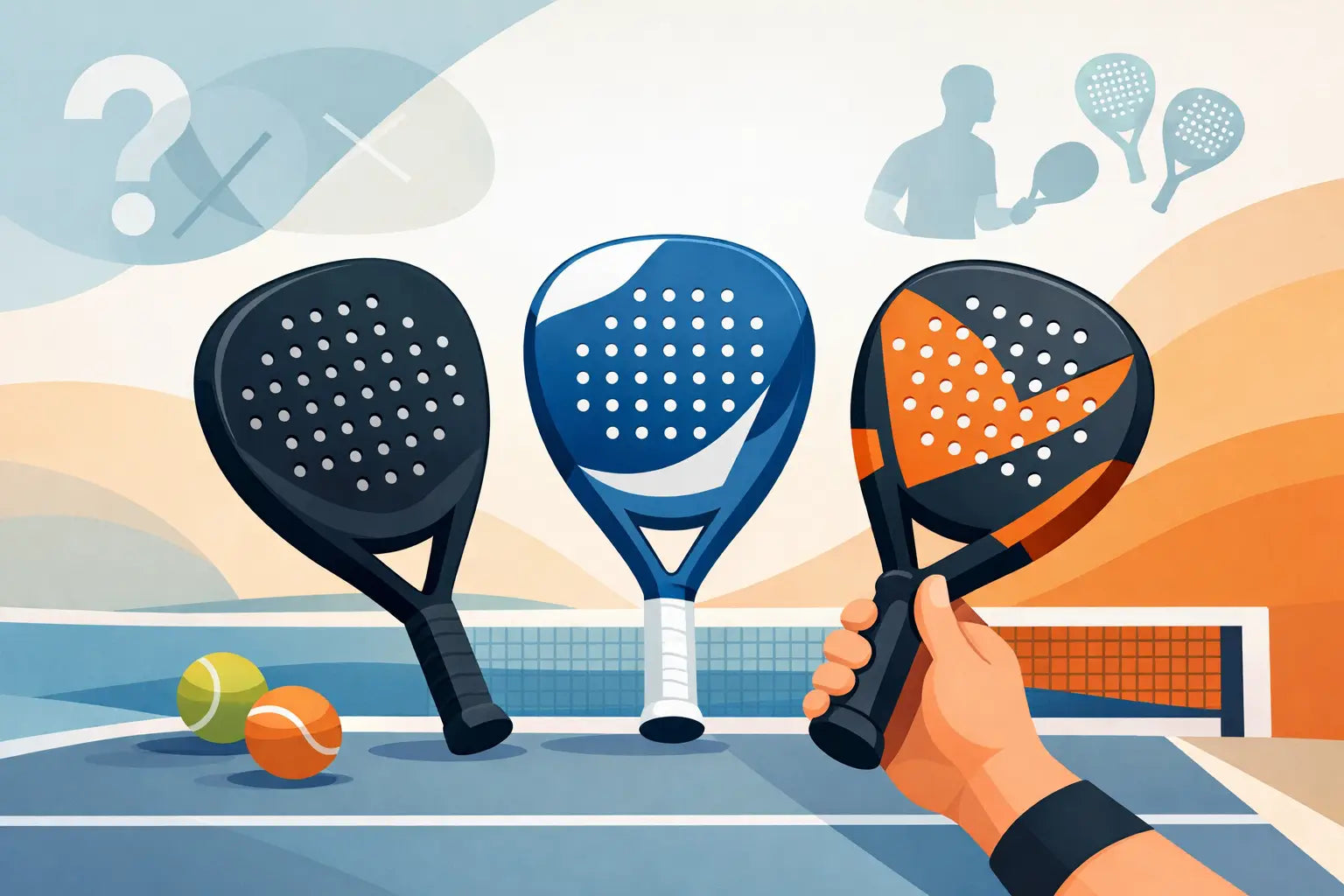
The most obvious difference between padel rackets is their shape. The shape determines two critical things: the balance (where the weight sits) and the sweet spot (the perfect area to strike the ball).
Round Rackets (The Control Masters)
If you want to place the ball exactly where your opponent is not, this is your weapon.
Round rackets like the PDX Aurora and PDX Rayo are designed with a low balance point. This means the weight sits near the grip, making them feel lighter and more manoeuvrable than they actually are.
- The Sweet Spot: Massive, and located dead center.
- The Balance: Low (the weight sits near the grip).
- Who is it for? Beginners, defensive tacticians, and players recovering from elbow injuries.
- The Verdict: Round rackets are incredibly forgiving. If you miss-hit slightly off-center, the ball still flies true. Because the weight is near your hand, they feel remarkably light. This allows for lightning-fast reactions at the net.
If you are just starting out, check out our full beginner's guide to padel rackets for more recommendations.

Diamond Rackets (The Power Hitters)
Diamond rackets have a flattened top that gives them an aggressive, angular look. They are built for one thing only: ending the point.
The PDX Tormenta is a diamond-shaped racket designed for players ready to add aggression to their game.
- The Sweet Spot: Tiny, and located high up near the top edge.
- The Balance: High (head-heavy).
- Who is it for? Intermediate players looking to add power to their game.
- The Verdict: The head-heavy balance acts like a sledgehammer. It generates massive leverage when swinging overhead. But beware. They are deeply unforgiving. Miss the tiny sweet spot, and the ball dies. The heavy head can also cause arm fatigue for unconditioned players.

Teardrop Rackets (The All-Rounders)
Sitting perfectly between round and diamond, the teardrop is the undisputed king of versatility.
The PDX Furia combines a hybrid teardrop shape with full 12K carbon construction, giving you the best of both worlds.
- The Sweet Spot: Medium-sized, sitting slightly above the center.
- The Balance: Medium (evenly distributed).
- Who is it for? Advanced players who play a transition game.
- The Verdict: Teardrop rackets are the most popular shape on the market. They give you enough power to smash effectively, but they remain manoeuvrable enough to defend the baseline. If your game constantly shifts between attack and defense, this is your racket.

The Core: EVA vs. FOAM
Shape dictates balance, but the foam inside the racket dictates how the ball actually feels when you hit it.
EVA Rubber (Stiff & Powerful)
EVA (Ethylene Vinyl Acetate) is a dense, hard rubber used in most premium rackets.
- The Feel: Hard and rigid.
- The Benefit: Ultimate power. Because the rubber does not compress much, 100% of your swing energy transfers directly into the ball. It is also highly durable.
- The Drawback: It absorbs very little shock. This means more vibrations travel up your arm. You have to generate your own pace.
FOAM (Soft & Springy)
Usually made of polyethylene, FOAM is significantly softer and more porous.
- The Feel: Soft, bouncy, and comfortable.
- The Benefit: Incredible ball output. The ball acts like it is hitting a trampoline, shooting off the racket with almost zero effort from you. It also absorbs vibrations brilliantly to save your elbow.
- The Drawback: You lose maximum top-end power on heavy smashes, and FOAM degrades faster than EVA.
The Face: Carbon Fibre vs. Fibreglass
The outer shell you actually look at is not just for aesthetics. It dramatically changes the rigidity of the racket.
Fibreglass (The Trampoline)
Fibreglass is flexible and highly elastic. When the ball hits a fibreglass face, the material stretches and snaps back. This gives you fantastic free power (ball output) and a very soft, forgiving feel.
It is the perfect material for beginners, which is why both the PDX Aurora and PDX Rayo use a fibreglass-carbon hybrid construction. This gives new players the forgiveness they need without sacrificing durability.
Carbon Fibre (The Scalpel)
Carbon fibre is rigid, ultra-lightweight, and incredibly strong. A carbon face will not stretch when the ball hits it. You will not get any free bounce. You have to generate the power yourself. But in return, you get surgical precision and devastating speed on aggressive shots.
Pro tip: You will often see carbon graded by K counts like 3K, 12K, or 18K. The higher the number, the more carbon threads are woven together. This generally results in a stiffer, more advanced feel. The PDX Furia uses a 12K carbon face for maximum responsiveness.
The Verdict: Which Padel Racket Should You Buy?
Stop buying rackets just because they look cool. Buy the racket that fixes the holes in your game.
For Beginners (0-6 months)
Buy a round shape with a soft FOAM or soft EVA core and a fibreglass face. It will forgive your mistakes and protect your arm.
Our pick: The PDX Aurora (£74.95) or the PDX Rayo (£74.95). Both offer the control and forgiveness you need in your first few months.
For Intermediate Players (6-18 months)
Buy a diamond shape with a medium EVA core and a 3K carbon fibre face. It gives you power without being completely unforgiving.
Our pick: The PDX Tormenta (£119.95). Diamond-shaped power with a 3K carbon face, designed for players ready to add aggression to their game.
For Advanced Players (18+ months, regular matches)
Buy a teardrop shape with full carbon construction and a 12K carbon fibre face. Maximum versatility for players who can exploit both power and control.
Our pick: The PDX Furia (£155.95). Full 12K carbon construction in a hybrid teardrop shape, built for serious players who need an all-court weapon.
Quick Comparison Table
| Shape | Best For | Sweet Spot | Balance | Example Product |
|---|---|---|---|---|
| Round | Beginners, control players | Large, centered | Low | PDX Aurora |
| Diamond | Intermediate power players | Small, high | High | PDX Tormenta |
| Teardrop | Advanced all-court players | Medium, above center | Medium | PDX Furia |
Your padel racket matters, but it is not the magic solution.
Spend enough to get something well-made and appropriate for your level (£60-120 for most players). Do not spend £150+ until you have developed the technique to justify it.
And honestly? The best investment you can make is lessons and court time. The racket just needs to not get in your way.
Still not sure which racket is right for you? Browse our full range of PDX padel rackets.